

Why Top AV Companies Are Suddenly Abandoning the 'Do-It-All' Self-Driving Dream
The autonomous vehicle industry has officially pivoted from generalized AI to hyper-focused commercial niches. Find out which lanes the biggest players are choosing to secure their financial survival.
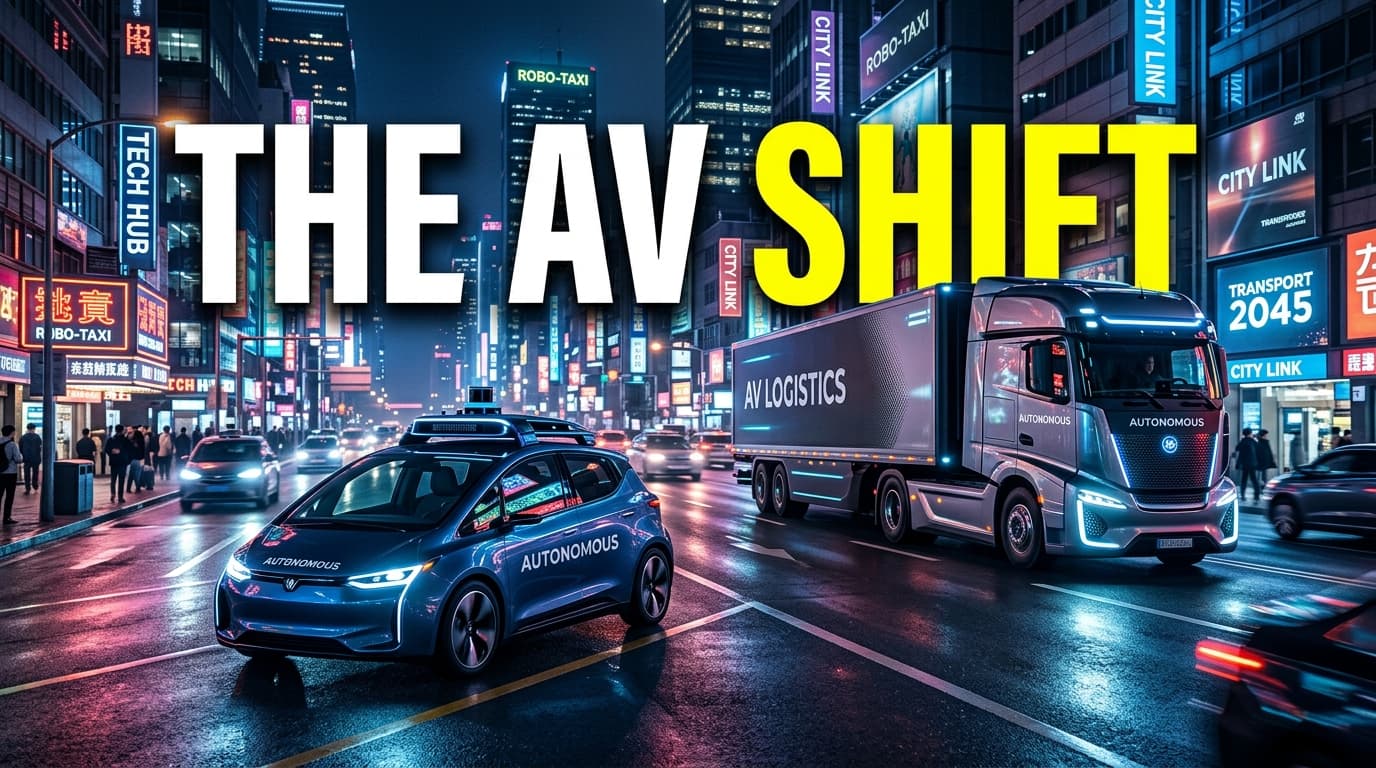
Autonomous vehicle development has officially exited its wild west phase. Instead of trying to conquer every road type and use case at once, top AV companies are finally carving out highly specific niches to survive in a tightening economy. If you want to know who will actually win the self-driving race, you need to understand exactly which battles they have chosen to fight.
Key Takeaways
- Major autonomous vehicle firms are completely abandoning broad, generalized self-driving goals to focus on distinct commercial sectors.
- Urban robotaxis remain a fierce battleground restricted to a few well-funded giants capable of burning massive amounts of capital.
- Autonomous trucking is emerging as the most viable near-term path to actual profitability for mid-sized technology startups.
- Last-mile delivery robots face significantly fewer regulatory hurdles due to their low operating speeds and lack of human passengers.
- Investors are explicitly demanding clear timelines for commercialization rather than funding open-ended artificial intelligence research projects.
The Death of the Generalized Self-Driving Dream
Just a few years ago, technology executives promised a ubiquitous artificial intelligence brain capable of handling any vehicle type in any environment. The pitch was incredibly ambitious: a single software stack that could seamlessly transition from navigating dense urban grids in a passenger taxi to hauling sixty thousand pounds of freight across snowy interstate highways. Fast forward to the late months of 2026, and that particular fantasy has collided with harsh physics and highly skeptical venture capital markets.
AV companies have realized that solving the final fraction of a percent of autonomous edge cases requires an exponential increase in funding. As a result, they are pivoting hard toward specialization. The broad approach is entirely dead. The specialized approach is the only path forward for firms that want to avoid bankruptcy. This strategic pivot is driven by several intersecting pressures that have fundamentally altered the automotive technology sector.
- Tightened Capital Markets: High interest rates and impatient investors mean startups can no longer raise billions based purely on visionary promises. They need actual, paying customers.
- Regulatory Realities: Government safety agencies are demanding massive, highly specific safety dossiers for every new operational domain a company attempts to enter.
- Hardware Optimization: Compute power and advanced sensor suites are incredibly expensive, pushing firms to optimize their hardware loadouts for very specific tasks rather than generalizing them for all possibilities.
- Public Perception: Consumer trust requires flawless execution in controlled, predictable environments before any large-scale public rollout can succeed.
Urban Robotaxis: High Risk and High Reward
Passenger transport in major cities represents the most visible and heavily scrutinized lane in the autonomy race. This specific sector is dominated by heavily capitalized giants who can afford the brutal attrition rate of urban testing. Moving fragile humans through chaotic city environments is arguably the hardest technical challenge in the entire industry. It requires billions of dollars in continuous funding, alongside a willingness to weather intense public backlash whenever a vehicle makes an error.
The sensor suites required for this specific task are staggering in their complexity. A standard urban robotaxi must process data from multiple spinning lidar arrays, advanced optical cameras, and redundant radar systems in real time. The software must predict the erratic movements of pedestrians, aggressively swerving cyclists, and unpredictable emergency vehicles. To manage this immense difficulty, AV companies targeting this lane have adopted very specific operational strategies.
- Geofenced Expansion: Companies map a single neighborhood down to the millimeter, proving the technology works perfectly in a tiny area before slowly expanding outward block by block.
- Purpose-Built Hardware: Leading firms are moving away from retrofitting standard consumer sedans. Instead, they are deploying custom-built transport pods featuring sliding doors, massive interior screens, and a complete lack of steering wheels or pedals.
- Remote Assistance Hubs: When a vehicle encounters an unpredictable scenario, remote human operators are standing by to review the camera feeds and provide strategic guidance to clear the intersection safely.
Autonomous Trucking: The Pragmatic Profit Engine
While urban passenger transport generates the most viral social media clips, the middle-mile freight lane is quietly attracting massive institutional investment. Highway driving is highly predictable compared to city streets. Traffic generally flows in one direction, pedestrians are strictly prohibited, and travel speeds remain relatively consistent for long stretches. Recognizing this structural advantage, several prominent AV companies have entirely abandoned passenger transport to focus exclusively on commercial logistics.
The business case for autonomous trucking is incredibly compelling in the current economic climate. The global supply chain suffers from a persistent shortage of long-haul human drivers, making freight companies desperate for automated solutions. The prevailing strategy in this sector is the hub-to-hub transfer model. A human driver hauls a loaded trailer from a local factory to a transfer station situated directly adjacent to a major interstate highway. The autonomous rig then couples to the trailer and drives it hundreds of miles across the country to a secondary transfer station, where another human driver completes the complex final delivery.
This operational model offers massive efficiency gains. Machines do not require sleep, allowing freight networks to bypass strict hours-of-service regulations that force human drivers to pull over and rest. Furthermore, algorithmic acceleration and braking profiles save significant diesel fuel costs over long distances, adding an immediate positive impact to the bottom line of major logistics corporations.
The Last-Mile Delivery Niche
Operating entirely removed from massive semi-trucks and passenger pods, a distinct group of AV companies has chosen the highly specialized lane of low-speed local delivery. These firms deploy small, lightweight robots designed exclusively to carry groceries, fast food, and retail packages. This specific operational lane drastically lowers the kinetic energy involved in any potential collision, making municipal regulators much more lenient regarding testing permits.
Because there are no human occupants inside these delivery robots, engineers do not need to worry about strict crash-test safety ratings designed for passenger survival. The primary technical challenges here involve economic scaling, sidewalk navigation, and preventing outright vandalism. These firms prioritize cheap, easily manufactured hardware over the complex, ultra-expensive sensor suites utilized by the robotaxi sector.
By keeping vehicle speeds below twenty miles per hour and operating primarily on neighborhood streets or university campuses, these companies can launch commercial services much faster than their highway-bound competitors. The margins on delivering a single pizza are incredibly thin, requiring these startups to deploy vast fleets of robots to generate meaningful revenue. However, the lack of safety-critical liability makes this an incredibly attractive proposition for risk-averse investors looking for near-term returns.
The Future Landscape of Consumer Autonomy
While commercial fleet operators divide the market into distinct niches, the dream of selling autonomous software directly to private consumers remains a highly controversial topic. Developing software that can be installed on a privately owned vehicle requires a generalized approach, which is precisely the strategy most dedicated AV companies are actively abandoning. The landscape of late 2026 shows a massive structural dividing line between closed-fleet operators and consumer automotive manufacturers.
Fleet operators maintain total control over their sensor hardware, daily maintenance schedules, and highly detailed digital maps. This closed-loop system allows them to achieve remarkable safety statistics. Conversely, consumer software must operate on vehicles driving in unmapped rural areas, through extreme weather conditions, and with potentially degraded sensors. Because of this massive disparity in difficulty, most industry analysts expect private consumer vehicles to remain locked at partial autonomy, requiring constant human supervision for the foreseeable future, while fully autonomous technology flourishes strictly within commercial fleet applications.
Summary
The era of the generalized autonomous vehicle is officially over, replaced by a highly fragmented industry where financial survival dictates extreme specialization. By choosing specific operational domains, AV companies are successfully transitioning from experimental research projects into viable commercial businesses. This focused, pragmatic approach ensures that self-driving technology will actually become a permanent, functioning fixture in our global transport networks over the next decade.
FAQs
Why are AV companies changing their strategies?
Tightening venture capital markets and high interest rates have forced self-driving startups to abandon broad, expensive research goals. They are now focusing on highly specific commercial applications to generate revenue faster and prove their business models to skeptical investors.
Which autonomous vehicle sector is most profitable right now?
Autonomous middle-mile trucking is currently viewed as the fastest path to profitability. Highway driving is highly predictable, and the massive ongoing shortage of long-haul human drivers creates immediate, desperate demand from major freight logistics corporations.
Are robotaxis safer than human drivers?
Within their strictly geofenced operational areas, major fleet-operated robotaxis currently report significantly lower rates of at-fault collisions compared to the average human driver. However, they can still become confused by complex construction zones or erratic emergency vehicles.
Will I be able to buy a fully autonomous car soon?
It is highly unlikely that private consumers will be able to purchase a fully autonomous vehicle capable of driving anywhere without supervision in the near future. The industry has shifted its primary focus to commercial fleet operations rather than private consumer sales.
What happens to smaller self-driving startups?
Smaller firms that failed to pick a specific commercial lane early enough are currently facing severe financial distress. Most are either declaring bankruptcy, selling their intellectual property for pennies on the dollar, or being absorbed by massive legacy automakers.
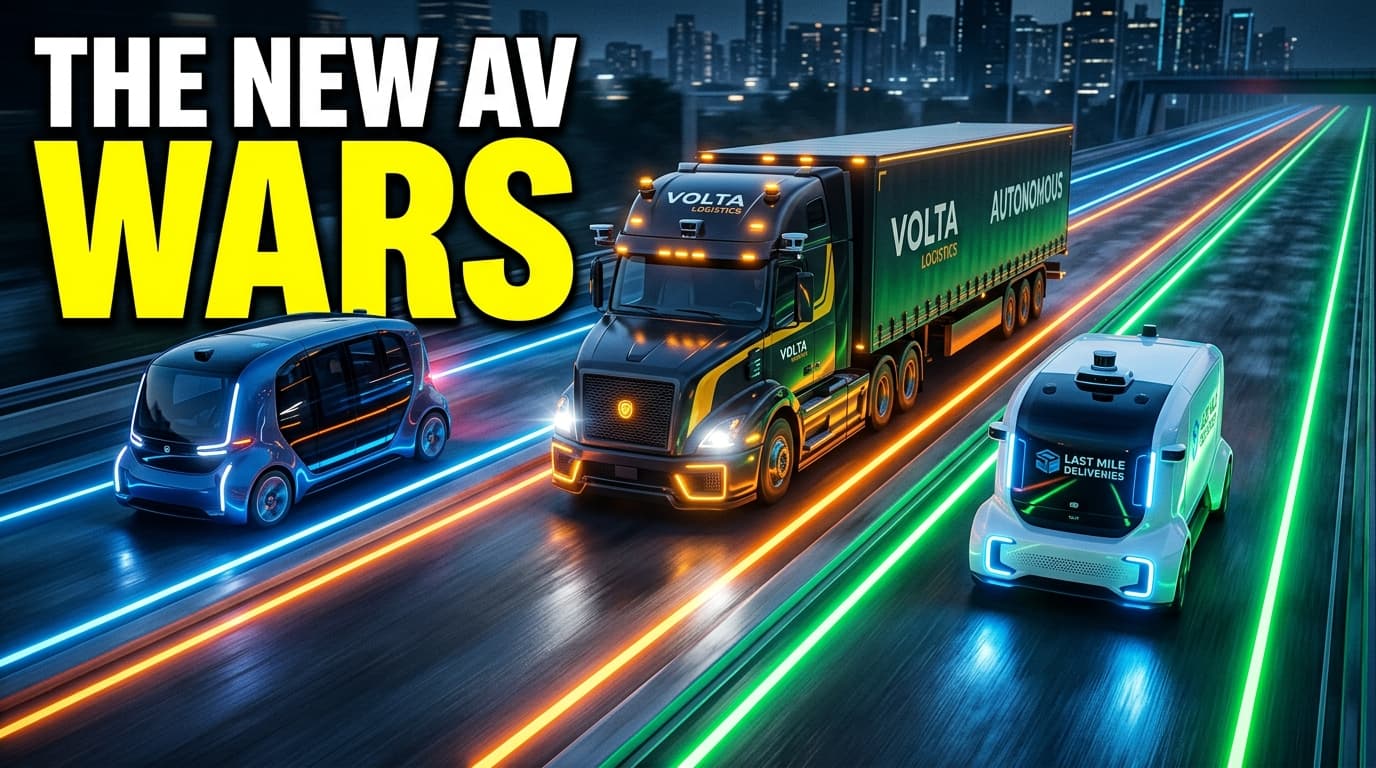
Why Autonomous Vehicle Companies Are Finally Giving Up on Trying to Do Everything
More in Tech
 Tech
TechMatt Mullenweg Survives Ouster Attempt as Automattic Installs Entirely New Board
 Tech
TechIs ChatGPT Dying? 5 Reasons OpenAI's Market Share is Crashing Before 2027
 Tech
TechFamily Outraged As Resellers Exploit 12-Year-Old's Death To Flip Pokémon Cards
 Tech
Tech