

Family Outraged As Resellers Exploit 12-Year-Old's Death To Flip Pokémon Cards
A grieving family is begging opportunists to stop using their son's tragic passing to artificially inflate the prices of his trading cards.
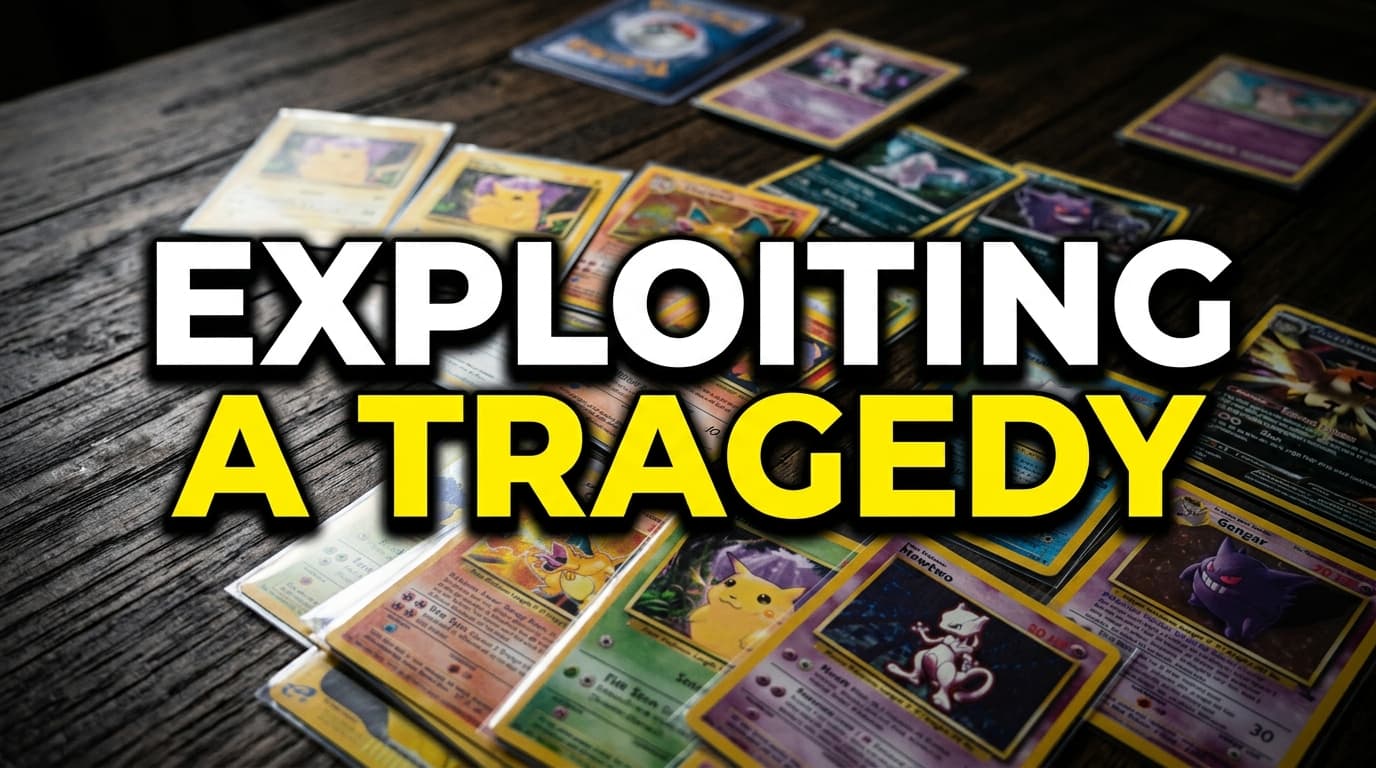
The secondary market for collectible trading cards has reached a grim new low after a grieving family discovered opportunists using their personal tragedy for financial gain. Following the heartbreaking passing of 12-year-old Avery, predatory Pokémon TCG resellers began weaponizing his story in online auction listings to artificially inflate the prices of his cherished collection. This blatant exploitation has sparked widespread outrage across the gaming community, prompting a desperate public plea from his parents to stop tarnishing their son's memory.
Key Takeaways
- Avery's family publicly condemned online sellers who are using his death to market and flip his trading cards at a premium.
- The controversy highlights a dark side of the Pokémon TCG resellers market where emotional manipulation is actively used to drive up auction bids.
- Legitimate collectors and community leaders are organizing digital boycotts and mass reporting campaigns against these specific marketplace listings.
- Major auction platforms are struggling to automatically detect and remove listings that exploit personal tragedies through subtle text descriptions.
- Fans are encouraged to honor Avery's memory through verified charitable donations rather than purchasing overpriced cardboard from opportunistic flippers.
The Heartbreaking Story Behind Avery's Collection
Avery was entirely devoted to the social and competitive aspects of the Pokémon Trading Card Game. According to statements from his family and local community members, the 12-year-old was a fixture at local card shops and weekend tournaments. He was widely known for his generous spirit, frequently giving away rare holographic cards to younger players who had just lost matches or who could not afford expensive booster packs. His approach to the hobby was rooted entirely in sharing joy, making friends, and building a welcoming environment for newcomers.
Following his sudden passing, his family sought to honor that exact spirit. They initially planned to distribute portions of his extensive card binders to his closest friends, local league players, and charitable organizations. The intention was to ensure his beloved collection ended up in the hands of children who would appreciate and play with the cards exactly as Avery did. Unfortunately, the decentralized nature of local trading meant that several high-value cards quickly slipped out of the immediate community and into the hands of profit-driven individuals.
Within days, his parents were horrified to find listings on major auction sites explicitly referencing Avery by name. These listings featured lengthy, emotionally manipulative descriptions detailing the child's passing, framing the purchase of the card as a way to own a piece of his legacy. The sellers attached massive price premiums to these items, attempting to extract maximum profit from sympathetic buyers who might believe the proceeds were helping the grieving family. The parents quickly released a statement clarifying that they had zero affiliation with these sellers, stating clearly that this behavior does not honor Avery's generous heart.
The Mechanics of Predatory Pokémon TCG Resellers
The business of flipping trading cards experienced a massive surge in mainstream popularity a few years ago, transforming a niche hobby into a highly competitive financial market. While many buyers and sellers operate strictly within ethical boundaries, a vocal subset of Pokémon TCG resellers will use any available tactic to maximize their profit margins. When raw market data fails to justify a high price tag, these bad actors turn to fabricated provenance and emotional manipulation to close the deal.
Establishing provenance is a common practice in high-end collectibles. If a specific item was owned by a celebrity, a world champion, or a notable historical figure, that verifiable history can legitimately increase its market value. Opportunistic flippers attempt to hijack this concept by turning a local tragedy into a makeshift certificate of authenticity. By attaching a sob story to an otherwise standard piece of printed cardboard, they hope to bypass a buyer's logical pricing limits and trigger an emotional purchase.
These sellers rely on several specific tactics to deceive buyers and manipulate marketplace algorithms:
- Fabricated Provenance: Claiming a random, unverified card belonged to a specific beloved community member to artificially boost its historical and emotional value.
- Sob Story Marketing: Using lengthy, emotionally manipulative item descriptions to guilt buyers into accepting massive markups under the guise of supporting a cause.
- Shill Bidding: Employing secondary accounts to bid on their own auctions, creating the illusion of high demand driven by the tragic backstory.
- Charity Washing: Vaguely suggesting that a completely undefined portion of the final sale might go to a relevant charity, which is rarely tracked or enforced by the hosting platform.
- Rapid Flipping: Buying out memorial or charity lots intended for local communities at low prices, only to immediately list them on global platforms for triple the cost.
Community Backlash Against Exploitative Flipping
The response from the broader gaming community has been swift and unforgiving. As news of the exploitative listings spread across social media, dedicated hobbyists mobilized to protect the family's privacy and disrupt the sellers' profit streams. Popular content creators and prominent collectors dedicated videos and podcasts to exposing the offending accounts, urging their massive audiences to avoid engaging with the auctions entirely.
On forums and social media platforms, moderators quickly pinned threads detailing exactly how to flag and report the offending listings to platform administrators. The coordinated effort resulted in several high-profile auctions being pulled down for violating terms of service regarding the exploitation of human tragedy. Local game stores in Avery's region also took immediate action, sharing the usernames of the known flippers and permanently banning them from participating in sanctioned tournaments or trading nights.
This fierce pushback highlights a growing exhaustion within the community. For years, legitimate players have watched their favorite hobby become infested with bad actors who view every release, event, or community moment strictly as a financial opportunity. The exploitation of a child's death served as a breaking point. By drawing a hard line in the sand, community leaders are sending a clear message that unscrupulous Pokémon TCG resellers face swift condemnation and total ostracization from the physical and digital spaces they rely on to source their inventory.
Steps To Protect The Hobby's Integrity
Eradicating this type of predatory behavior requires constant vigilance from the buyers who fuel the secondary market. Auction platforms process millions of listings daily, meaning automated moderation tools frequently fail to catch nuanced, emotionally manipulative text descriptions. The responsibility of policing the market often falls directly on the consumers.
If you are active in the secondary market and want to ensure your purchases do not fund exploitative practices, consider adopting the following habits:
- Verify the Seller History: Always check the seller's feedback and previous listings to see if they have a pattern of predatory behavior or consistently use tragic stories to market unrelated items.
- Report Exploitative Listings: Use the dedicated reporting tools on platforms like eBay or Mercari to flag items that clearly violate policies against profiting from human tragedy or disaster.
- Bypass the Middleman: If a seller claims proceeds from a massive markup are going to a grieving family, ignore the auction entirely. Find the family's official, verified fundraising page and donate your money directly to them.
- Refuse the Premium: Never pay above standard market value just because a card has a sad story attached to it. Paying the premium only incentivizes scammers to continue exploiting similar situations in the future.
- Demand Platform Accountability: Publicly pressure auction sites to strictly enforce their terms of service regarding charity listings and the monetization of recent tragedies.
Summary
The exploitation of a 12-year-old's tragic passing to inflate the value of trading cards represents a disturbing low for the secondary collectibles market. Avery's family has rightfully condemned these actions, urging the public to remember their son for his generosity rather than enriching opportunistic flippers. Combating unethical Pokémon TCG resellers requires the entire community to actively report manipulative listings, refuse to pay artificial emotional premiums, and prioritize direct, verified charitable support over buying overpriced merchandise.
FAQs
Why are Pokémon TCG resellers using Avery's name?
Opportunistic sellers are attempting to create fake historical provenance and emotional weight for their items. By attaching a tragic backstory to a card, they hope to manipulate sympathetic buyers into paying significantly more than the item's actual market value.
Is it illegal to sell cards using a tragic backstory?
While not strictly illegal in most jurisdictions, it is highly unethical and generally violates the terms of service of major auction platforms. Most marketplaces have explicit rules against listings that attempt to profit from human tragedies, disasters, or deaths.
How is Avery's family responding to the situation?
The family is horrified and has issued public statements condemning the sellers. They emphasized that this behavior completely contradicts Avery's generous nature and asked the community to stop engaging with these exploitative listings.
What are marketplace platforms doing about these listings?
Platforms rely heavily on automated filters and user reports to police millions of daily listings. Once the community began mass-reporting these specific auctions, administrators stepped in to remove several of the most egregious offenders for policy violations.
How can the community support Avery's family directly?
The best way to support the family is to respect their privacy and donate directly to verified charitable funds or local community leagues set up in Avery's name. Buyers should completely avoid purchasing cards from random sellers claiming to represent his legacy.
NIS America Head Sparks Fierce Debate: Will AI Actually Speed Up Game Dev?
More in Gaming
 Gaming
Rockstar Drops a $400 GTA 6 Collector Box, But There Is One Massive Catch
 Gaming
This Legendary RPG Studio Just Exposed the Biggest Myth About AI Game Development
 Gaming
Ace Combat 8 Just Broke the Flight Sim Curse and Critics Cannot Stop Crying
 Gaming