

FFXIV Mod Underground Implodes: Top NSFW Creator Blacklisted Across Major Hubs
Major Final Fantasy XIV mod repositories and Discord hubs have issued blanket bans against a prominent adult content creator following allegations of harassment and asset theft.
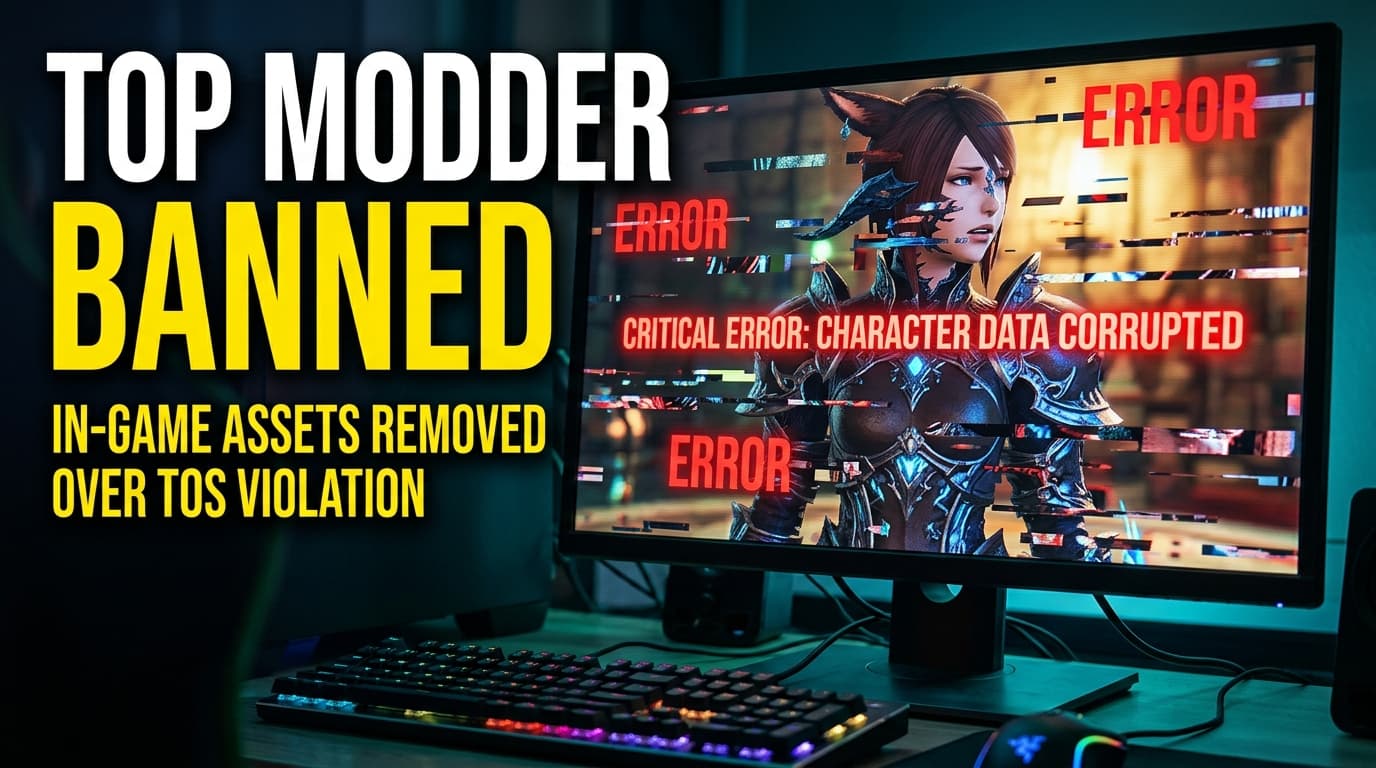
A high-profile scandal has fractured the underground Final Fantasy XIV modding community after multiple repository hubs and community Discords issued coordinated, permanent bans against a prominent adult mod creator. The drastic community action follows months of escalating disputes surrounding asset attribution, community harassment, and monetization disputes that threatened to drag the wider scene into legal jeopardy. Here is the full breakdown of why the ecosystem turned on one of its most visible creators, how community leaders reached this breaking point, and what the fallout means for players managing customized game clients.
Key Takeaways
- Major community hubs, including prominent mod repositories and collaborative Discords, enacted an unprecedented coordinated ban against a prolific adult content creator.
- The formal disciplinary actions stem from verified reports of asset scraping, license violations, and systematic harassment targeting other mod authors.
- Square Enix maintains a strict anti-modification clause in the Final Fantasy XIV Terms of Service, making community self-policing critical to prevent developer crackdowns.
- Monetized modding networks, specifically Patreon-exclusive paywalls, continue to create severe legal and ethical tension across the MMO player base.
- End users face broken asset dependencies and mod incompatibilities as community tools purge the banned author's frameworks from shared databases.
The Escalation Behind the Final Fantasy XIV Modding Ban
The quiet ecosystem that alters the visual appearance of Square Enix's flagship MMO operates under a delicate balance. While thousands of players alter their local textures, animations, and character models using client-side tools like Penumbra and TexTools, the entire operation exists in direct violation of the official game rules. When internal friction explodes into public view, community managers move swiftly to isolate bad actors. Over the past week, several primary Final Fantasy XIV modding hubs, skin distribution boards, and private creator networks enacted a total embargo against a prolific adult asset designer who had dominated Patreon subscriber leaderboards for months.
Trouble brewed beneath the surface for nearly half a year before culminating in this decisive response. Community moderators released extensive dossiers detailing pattern behavior that crossed lines established by creators who share 3D models openly. The grievances documented in community announcements focus on three distinct violations:
- Unauthorized Asset Re-use: The creator repeatedly extracted baseline meshes, custom normal maps, and rigging structures built by open-source collaborators, incorporating them into premium downloads without giving credit or securing permission.
- Targeted Harassment Campaigns: When smaller 3D modelers raised objections regarding stolen topology, the banned creator allegedly directed paying patrons to flood rival social channels and Discord servers with abusive messages.
- Licensing Manipulation: The individual placed restrictive commercial terms on digital modifications derived directly from Square Enix copyrighted files, exposing other contributors to elevated legal scrutiny.
The coordinated response represents a rare instance of unilateral consensus across competing community discords. Historically, rival hubs maintain disparate policies regarding adult modifications. In this case, the severity of the documented harassment drove independent administrative teams to synchronize their blacklists within a forty-eight-hour window.
The Fragile Truce Between Square Enix and Mod Authors
Every single player engaging in the Final Fantasy XIV mod scene walks on thin ice. Square Enix director and producer Naoki Yoshida, known universally as Yoshi-P, has addressed third-party software repeatedly during official Live Letters. The corporate stance remains unambiguous on paper: all third-party software, visual alterations, user interface overlays, and memory injectors are strictly prohibited. Modifying the client violates Section 2.1 of the Final Fantasy XIV User Agreement, which explicitly forbids reverse engineering, altering game data, or redistributing game assets.
In practice, Square Enix operates under a policy colloquially referred to as 'don't ask, don't tell.' Because visual modifications function entirely client-side without transmitting altered telemetry to the game servers, automated detection rarely flags purely aesthetic tools. The developer does not install intrusive rootkit-level anti-cheat programs on player machines. Instead, Yoshida has insisted that players refrain from flaunting modified assets in public streams, using tools to abuse fellow players in competitive raids, or profiting financially from intellectual property belonging to the studio.
This unspoken arrangement functions only as long as community members avoid making headlines. When an adult modder amasses tens of thousands of dollars each month by locking altered copyrighted character models behind subscription gates, the risk of a corporate legal crackdown multiplies exponentially. The Final Fantasy XIV modding ban serves primarily as a protective reflex by community leaders desperate to prevent Square Enix corporate counsel from issuing sweeping cease-and-desist letters to utility developers.
Monetization, Patreon Paywalls, and Community Ethics
The conflict exposes a long-standing ideological rift within modern video game customization: the commercialization of modifications. During the early days of MMO skinning, hobbyists distributed files freely on niche forums, driven by technical curiosity and mutual enthusiasm. The rise of membership platforms transformed the landscape into a lucrative cottage industry where skilled 3D artists earn substantial monthly incomes by designing custom hairstyles, hyper-realistic clothing, and explicit anatomical overhauls.
Tensions flare when creators exploit the grey market for commercial dominance. The standard accepted by responsible groups permits a temporary early-access window, typically two to four weeks, where patrons receive access to new skins before public release on free platforms like the XIV Mod Archive. The creator subjected to the recent blacklisting routinely ignored this community convention, establishing permanent paywalls and charging upwards of twenty dollars for individual clothing packs.
This commercial posture creates distinct operational hazards for the wider hobby:
- Square Enix Legal Precedents: Selling access to derivatives of copyrighted assets crosses from technical breach of contract into active copyright infringement, inviting statutory damages under copyright law.
- Destruction of Mutual Aid: Free developers who maintain foundational tools like XIVLauncher, Penumbra, and anamnesis tools receive no kickbacks while commercial modders monetize their volunteer infrastructure.
- Asset Monopolization: Locking fundamental body replacers behind paid walls fractures the community pipeline, forcing cosmetic designers to choose between catering to open frameworks or paywalled ecosystems.
Purges Across Registries and Player Impact
The practical fallout of this comprehensive Final Fantasy XIV modding ban struck immediately. Administrators at the primary distribution databases removed hundreds of upload pages linked to the individual. Collaborative archives scrubbed historical entries to scrub all associated hyperlinks, asset dependencies, and credit mentions. Discord networks exceeding tens of thousands of members purged dedicated showcase channels, warning users that sharing or requesting the banned creator's work would lead to instant account expulsion.
For ordinary players, the sudden blacklisting introduced widespread technical headaches. Custom skinning relies heavily on cascading dependencies. If a user installs a custom armor set designed to fit a specific third-party body base created by the banned author, removing the base breaks the entire chain, causing character models to render as invisible voids or fractured polygons. Players must now audit their local TexTools or Penumbra index directories to identify and purge corrupted links, replacing legacy skeletons with compliant, open-source alternatives like the TBSE or Bibo setups maintained by cooperative teams.
Community moderators emphasized that everyday users who previously downloaded the files will not face bans from public Discords simply for having outdated files on their hard drives. However, sharing links, hosting mirrors, or providing troubleshooting support for the blacklisted creator's content remains strictly forbidden across all participating hubs.
Summary
The sweeping Final Fantasy XIV modding ban against a prominent adult creator proves that the community will sacrifice high-profile talent to preserve its collective survival. By ejecting an author guilty of asset scraping, severe harassment, and predatory paywalling, network administrators aim to eliminate the toxic behavior threatening their underground ecosystem. While the move creates temporary technical headaches for players dependent on specific model bases, it reinforces the vital community standard that client customization must remain collaborative, ethical, and discreet.
FAQs
Why was the Final Fantasy XIV modder banned?
Major community hubs banned the creator after discovering clear evidence of intellectual property scraping, uncredited asset theft, coordinated harassment against rival 3D artists, and aggressive paywalls that violated community distribution policies.
Are mods officially allowed in Final Fantasy XIV?
No, all client-side modifications and third-party tools violate the Final Fantasy XIV Terms of Service. Square Enix enforces a zero-tolerance policy on paper, though enforcement primarily targets public display, cheating in raids, or harassment.
Will players get banned in-game for using modded clothing?
Square Enix does not run invasive anti-cheat software to detect local graphical replacements, so players are rarely penalized solely for client-side aesthetics. You risk an account ban if you share screenshots showing mods on social media alongside your character name or discuss modifications in game chat.
What should I do if my installed mods break after this purge?
Open your mod manager, identify any outfits or body bases linked to the banned author, and delete those specific packages. You can download safe, compliant replacement skeletons and mesh frameworks from reputable open-source community repositories.
How does Square Enix handle monetized mods?
Square Enix strictly prohibits making money from derived game assets. Creators who put customized Final Fantasy XIV assets behind permanent subscription paywalls run a severe risk of direct legal action and permanent service termination.

GOG's Massive Fall Sale Slashes Top PC Games to Under $15 Right Now
More in Gaming
 Gaming
Microsoft CEO Calls Xbox Layoffs 'Great To See' Amid Ruthless Streamlining
 Gaming
GTA 6 Pre-Order Guide: Which Edition Actually Gets You More for $99
 Gaming
Sony's State of Play Dropped a Wild LEGO PS1 and a Scary Until Dawn Sequel
 Gaming