

Meta Put Smart Glasses on Everyone at Connect, and the Shift Is Wild
Meta Connect showed that smart glasses have stolen the spotlight from heavy VR headsets, with Orion prototypes and Ray-Ban updates leading the hardware charge.
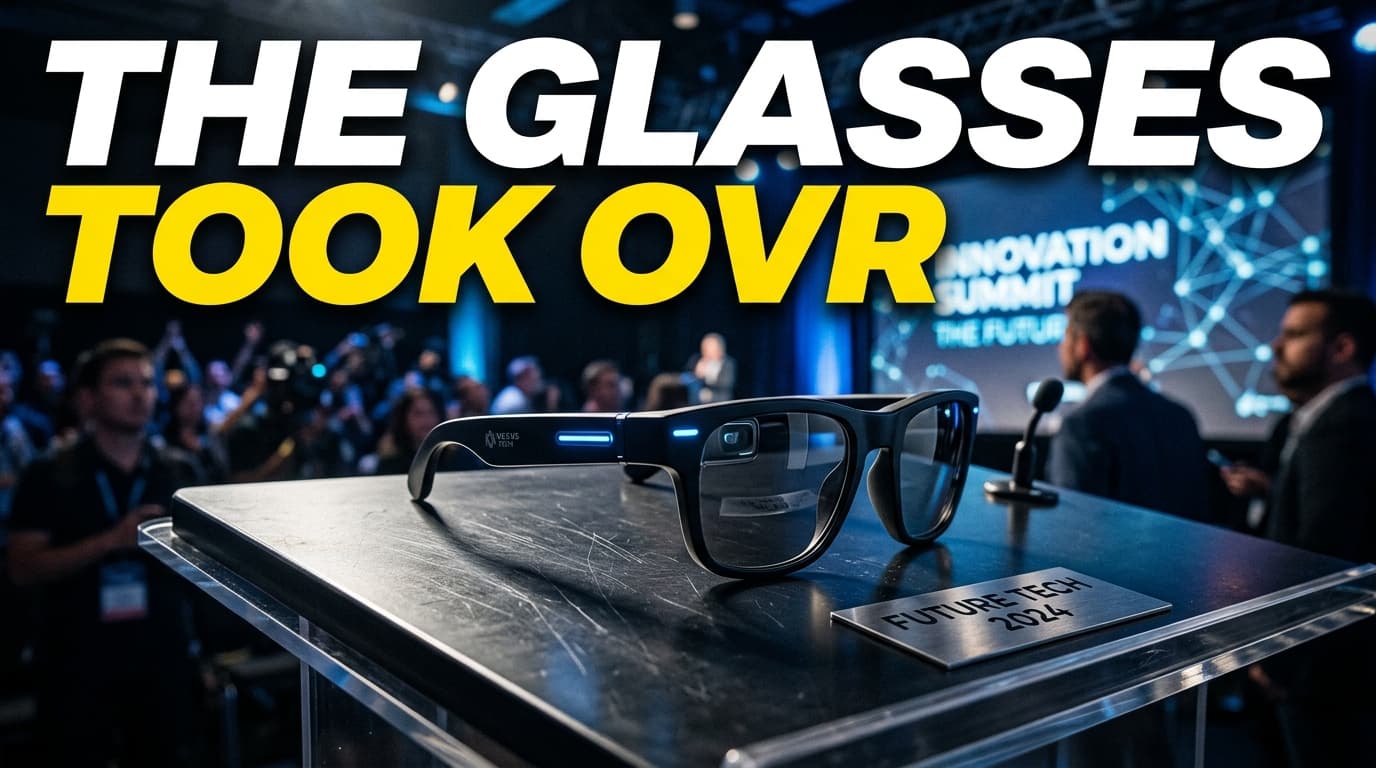
If you walked the halls of Meta Connect this year, one physical reality hit you immediately: giant plastic virtual reality headsets took a back seat while sleek spectacles dominated the room. Mark Zuckerberg staked the future of his computing empire on lightweight frames that look like ordinary eyewear rather than bulky diving masks. Here is what Meta revealed, why smart glasses are outperforming VR in daily adoption, and what the wild new Orion prototype means for your face.
Key Takeaways
- Meta transformed Connect into a smart glasses showcase, placing the Ray-Ban Meta frames front and center alongside the experimental Orion augmented reality prototype.
- The current generation Ray-Ban Meta smart glasses received major software upgrades, including real-time conversational AI, live foreign language translation, and visual reminders.
- The Orion prototype glasses feature a 70-degree field of view, micro-LED projectors, and a neural wristband input, though commercial production remains years away due to massive manufacturing costs.
- Meta reported that sales of its second-generation smart glasses outpaced the original version in a matter of months, signaling a massive pivot in consumer appetite.
- Hardware rivals like Apple, Snap, and Google now face intense pressure to match Meta's early lead in lightweight wearable AI hardware.
The Hardware Pivot: Why Eyewear Overtook Virtual Reality
For nearly a decade, Meta Connect served as a temple to the Quest lineup. Attendees expected heavy headsets, strap adjustments, and awkward virtual avatars bobbing in simulated rooms. This year felt dramatically different because the hardware sat comfortably on people's noses. Engineers, developers, and press members walked between presentations wearing standard-looking frames, using built-in microphones to query artificial intelligence and streaming live video directly to social feeds.
The shift stems from sheer pragmatism. While the Quest 3 remains a capable virtual reality console for gaming and fitness, it faces an inescapable friction barrier: people do not want to strap a half-kilogram block of glass, plastic, and lithium-ion batteries to their skulls during their daily commute or work routine. Meta smart glasses, developed in partnership with eyewear conglomerate EssilorLuxottica, solve that social barrier by masquerading as standard Wayfarers and Headliner frames weighing less than 50 grams.
Hardware sales figures back up this strategic reorientation. Luxottica leadership reported that the second-generation Ray-Ban Meta glasses sold more units in a few months than the original 2021 Ray-Ban Stories managed across their entire two-year shelf life. By stripping away heavy displays and focusing exclusively on spatial audio, high-resolution cameras, and hands-free voice assistance, Meta found an unexpected backdoor into mass-market hardware adoption.
Orion Arrives: A Glimpse of True Augmented Reality
While the commercial Ray-Ban models handled present-day duties at the conference, Meta gave select developers and journalists access to Orion, a prototype that Zuckerberg labeled the most advanced glasses the world has ever seen. Orion represents the true holy grail of personal computing: full augmented reality packed into a wearable form factor.
Engineering Orion required Meta's Reality Labs division to bypass traditional glass optics entirely. The prototype uses silicon carbide lenses rather than standard glass or polycarbonate. Micro-LED projectors mounted inside the temples beam digital images into these waveguides, bouncing light straight onto the retina with a 70-degree field of view. To put that in context, Magic Leap 2 provides roughly 45 degrees, and early Microsoft HoloLens units hovered around 30 degrees.
The system relies on a three-part hardware ecosystem to function:
- The glasses themselves, constructed from lightweight magnesium with embedded cameras for hand and eye tracking.
- A wireless compute puck that slips into a pocket, offloading graphics processing and battery drain via low-latency custom radio protocols.
- An electromyography (EMG) wristband that detects subtle motor neuron impulses from the wearer's wrist, allowing micro-gestures like pinches and thumb flicks to register without broad arm movements.
The manufacturing expense of silicon carbide and specialized micro-LEDs means Orion costs roughly 10,000 dollars per unit to assemble right now. Meta has zero intention of selling this specific version to consumers. Instead, the company plans to use Orion internally as a software development sandbox while its supply chain teams spend the next three to five years figuring out how to reduce production expenses to consumer levels.
Software Upgrades: Smarter Audio and Continuous Vision
Consumers who already own the 299-dollar Ray-Ban Meta frames received a suite of substantial over-the-air updates announced on stage. Meta is upgrading its multimodal artificial intelligence, moving from a rigid query-and-response model toward ambient awareness.
Previously, users had to say 'Hey Meta, look and tell me' whenever they wanted the system to parse visual scenes. The updated firmware introduces natural, continuous conversation. The glasses can process live visual feeds over a sustained period, helping you pick an outfit, navigate a transit station, or remember where you parked your car in a sprawling garage structure. If you gaze at a recipe ingredient list, you can ask for substitutions in real time without repeating the wake phrase every ten seconds.
The feature breakdown announced for current hardware includes:
- Live Speech Translation: The open-ear speakers translate spoken Spanish, French, or Italian into English instantly during an active conversation.
- Visual Memory Triggers: The onboard camera notes objects on command, sending notifications later to remind you to buy groceries or check a parking meter expiration.
- Third-Party Audio Partnerships: Seamless integration with Spotify, Amazon Music, Audible, and iHeartRadio for voice-prompted playback.
- Video AI Processing: Continuous scene analysis allowing the AI assistant to give ongoing directions or feedback rather than capturing a single static snapshot.
The Competitive Scramble: How Rivals Are Reacting
Meta's dominant presence in smart glasses puts intense pressure on Silicon Valley rivals who bet on different form factors. Apple launched the Vision Pro at 3,499 dollars, presenting a masterclass in spatial display resolution that nonetheless struggles with weight, isolation, and sluggish adoption. Reports indicate Apple has shifted internal engineering resources toward lightweight smart glasses, but an actual retail competitor remains years away.
Snap was early to this market with its camera-equipped Spectacles, but the company shifted its fifth-generation device entirely toward enterprise developers under a steep 99-dollar monthly subscription fee. Google, having suffered a public burn with Google Glass a decade ago, is partnering with Qualcomm and Samsung on Project Astra, attempting to bring Gemini AI into smart frames before Meta claims total market dominance.
The strategic stakes could not be higher. Whoever controls the hardware sitting on our faces will control the default search engine, camera roll, and communications platform of the next computing era. Smartphones have reached a plateau of iterative hardware updates, meaning the battle for the next physical platform is officially on.
Design Challenges: Battery Life, Heat, and Public Privacy
Despite the optimism on display at Connect, massive technical hurdles remain before glasses replace pocket computers entirely. Physics is an uncompromising adversary when engineering head-worn devices.
First, thermal dissipation poses a constant headache. Processors generate heat, and consumers will not tolerate warm plastic or metal pressing against their temples. Meta limits continuous video recording and AI scene parsing to short bursts partly to keep internal temperatures below threshold limits that could cause discomfort or skin irritation.
Second, battery life remains a glaring compromise. The current Ray-Ban frames offer around four hours of mixed use on a single charge. Heavy use of camera feeds and active Bluetooth streaming draws that number down drastically. The charging case remains a mandatory accessory for anyone hoping to make it through an entire workday.
Finally, public privacy concerns continue to linger. While Meta placed a bright white LED on the front frame to notify bystanders whenever the camera records video, critics point out that discreet accessories can be easily obscured or ignored in bustling public spaces. As software gains the ability to identify people, read documents from across a table, and run automated facial recognition scripts, regulatory scrutiny from European and American data watchdogs will intensify.
Summary
Meta Connect made one reality undeniable: smart glasses are no longer an experimental side project, but the central pillar of Meta's hardware ambitions. By iterating on stylish, lightweight audio frames today while constructing ambitious augmented reality prototypes like Orion for tomorrow, Meta has outflanked competitors who lingered too long in virtual reality headsets. If the tech giant can successfully lower manufacturing costs and solve stubborn battery limitations, the screen in your pocket might soon be rendered obsolete by the glasses on your face.
FAQs
How much do the current Meta smart glasses cost?
The standard Ray-Ban Meta smart glasses start at 299 dollars for basic lenses, with prices increasing up to 379 dollars for polarized, transition, or prescription lens configurations. They come with a charging case that provides up to 32 additional hours of battery life on the go.
Can the Orion smart glasses be purchased by regular consumers?
No, the Orion prototype is not for sale to the public and was built strictly as an internal development vehicle. Meta estimates that current manufacturing costs hover near 10,000 dollars per pair, with a commercial release targeted several years down the line.
How long does the battery last on Meta's smart glasses?
The current second-generation Ray-Ban Meta frames last roughly four hours under typical, intermittent usage. Heavy video recording, constant audio streaming, and continuous AI visual requests will deplete the battery much faster, requiring users to top up inside the included charging case.
Do Meta smart glasses record video without people knowing?
The frames feature a physical LED capture light mounted on the front corner that illuminates whenever the camera is actively recording. Meta's firmware disables recording if sensors detect that the privacy light has been covered with tape or paint.

Meta Just Dropped Early Access to Its Wildest AI Tool Yet (Here Is How to Get In)
More in Tech
 Tech
TechWhy Are Thousands of Middle Schoolers Secretly Hanging Out in NPR's Comment Section?
 Tech
TechGoogle Says Gemini 4 Is Coming Fast, and It's Racing to Catch Up to GPT-6
 Tech
TechWhy Meta Smart Glasses Stole The Entire Show At Meta Connect
 Tech
Tech