

Why Meta Smart Glasses Stole The Entire Show At Meta Connect
Meta Connect made one thing undeniably clear: Mark Zuckerberg sees smart eyewear, not bulky headsets, as the true future of personal computing.
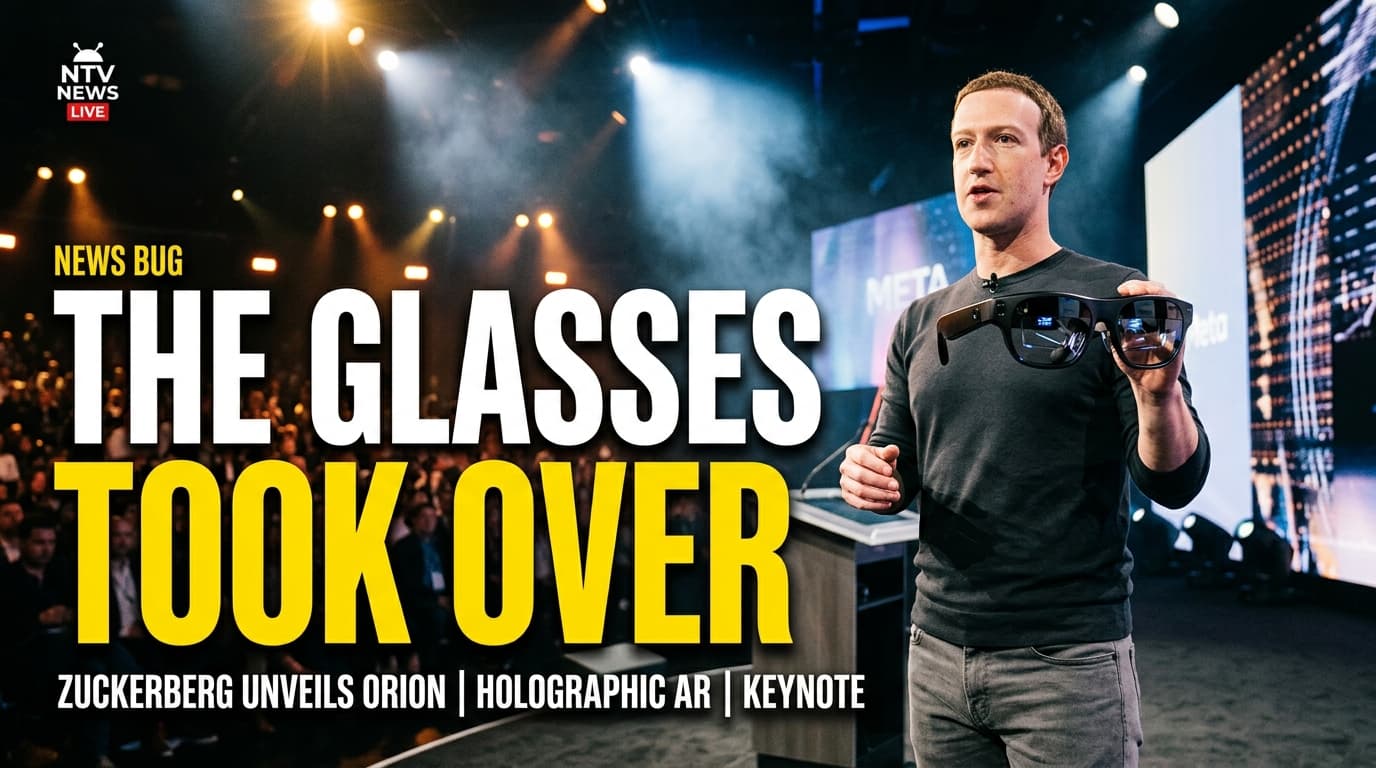
Walk across the courtyard at Meta Connect in Menlo Park, and you will see a rapid shift in how Silicon Valley thinks about computing. While the event used to center entirely on heavy virtual reality headsets strapped to people's faces, the true star of the conference was Meta smart glasses. From developers wandering between demo stations to executives presenting on the main stage, sleek camera-equipped frames replaced VR goggles as the main attraction.
Why Eyewear Is Overtaking Bulky Headsets
Attendees quickly noticed that Meta smart glasses were everywhere across the Menlo Park campus. The Ray-Ban Meta line, built in partnership with EssilorLuxottica, has quietly turned into one of the company's biggest hardware hits. Mark Zuckerberg spent a significant portion of his keynote pointing out how much user habits have changed over the past year. People do not want to isolate themselves inside a dark helmet for hours. They want ambient technology that sits on their faces, blends into everyday social environments, and answers questions on the fly.
The numbers support the shift. Meta confirmed that production runs for the Ray-Ban frames have repeatedly expanded to keep up with demand. Instead of treating smart eyewear as a quirky niche gadget for early adopters, buyers are wearing them to capture concerts, record family moments, and listen to podcasts without earbuds. Zuckerberg admitted that the retail success of current Meta smart glasses gave the company confidence to push forward with its most ambitious concepts years ahead of schedule.
Orion Brings True Augmented Reality Closer
The centerpiece of the hardware demonstrations was Orion, a prototype that Meta spent a full decade developing. Unlike the audio-and-camera frames currently in stores, Orion features transparent lenses made from silicon carbide that project holographic images straight onto the physical world. Micro-LED projectors beam crisp text, browser windows, and full-color 3D avatars directly into the user's field of view.
What surprised developers was how normal Orion looks compared to older AR experiments. Magic Leap and Microsoft HoloLens required massive visors, heavy battery belts, and awkward head straps. Orion weighs less than 100 grams. Interaction does not rely on hand-waving gestures alone. Instead, Meta paired the frames with an electromyography wristband that detects tiny nervous system impulses in your fingers. You can click, scroll, and type simply by twitching your thumb against your index finger while resting your hand comfortably on your lap.
Orion is not ready for store shelves yet. Zuckerberg stated that the manufacturing costs remain too high for consumer retail. Meta plans to use the working prototypes internally to build software libraries, test daily utility, and refine the form factor until production costs drop enough to create a commercial product.
Software Upgrades Hitting Frames Right Now
You do not have to wait for prototype hardware to see where this roadmap is headed. Meta announced an aggressive wave of software upgrades rolling out to existing consumer frames before the end of the year.
- Real-time speech translation: The glasses will translate conversations in real time between English, Spanish, French, and Italian, speaking the translated audio straight into the user's open-ear speakers.
- Visual memory prompts: Users can ask the glasses to remember where they parked, set a reminder to buy a specific brand of coffee they saw on a shelf, or transcribe phone numbers printed on business cards.
- Continuous video processing: Meta AI can now process streaming visual data continuously, allowing wearers to cook a recipe or assemble furniture while asking conversational questions without saying the wake word repeatedly.
The tech giant also showed off integrated partnerships with services like Spotify, Amazon Music, Audible, and iHeartRadio. The software lets users scan QR codes directly through the camera lens, call an Uber with a voice command, or set timers without ever pulling a phone out of their pocket.
The broader strategy is impossible to miss. Apple is betting on ultra-premium, high-immersion hardware with the Vision Pro, but Meta is taking the opposite route. The long-term plan for Meta smart glasses relies on blending fashion with ambient computing. By getting comfortable, stylish frames onto millions of faces today, Meta is laying the groundwork for a post-smartphone era where your glasses handle everything your phone currently does.