

Leaked Renders Reveal the Galaxy Tab S12 Ultra Is a 5.1mm Thin Beast with a 50MP Camera
New 360-degree renders of the Samsung Galaxy Tab S12+ and S12 Ultra have surfaced online. The massive leak details a switch to MediaTek processors, a remarkably thin 5.1mm chassis, and deep AI integration.
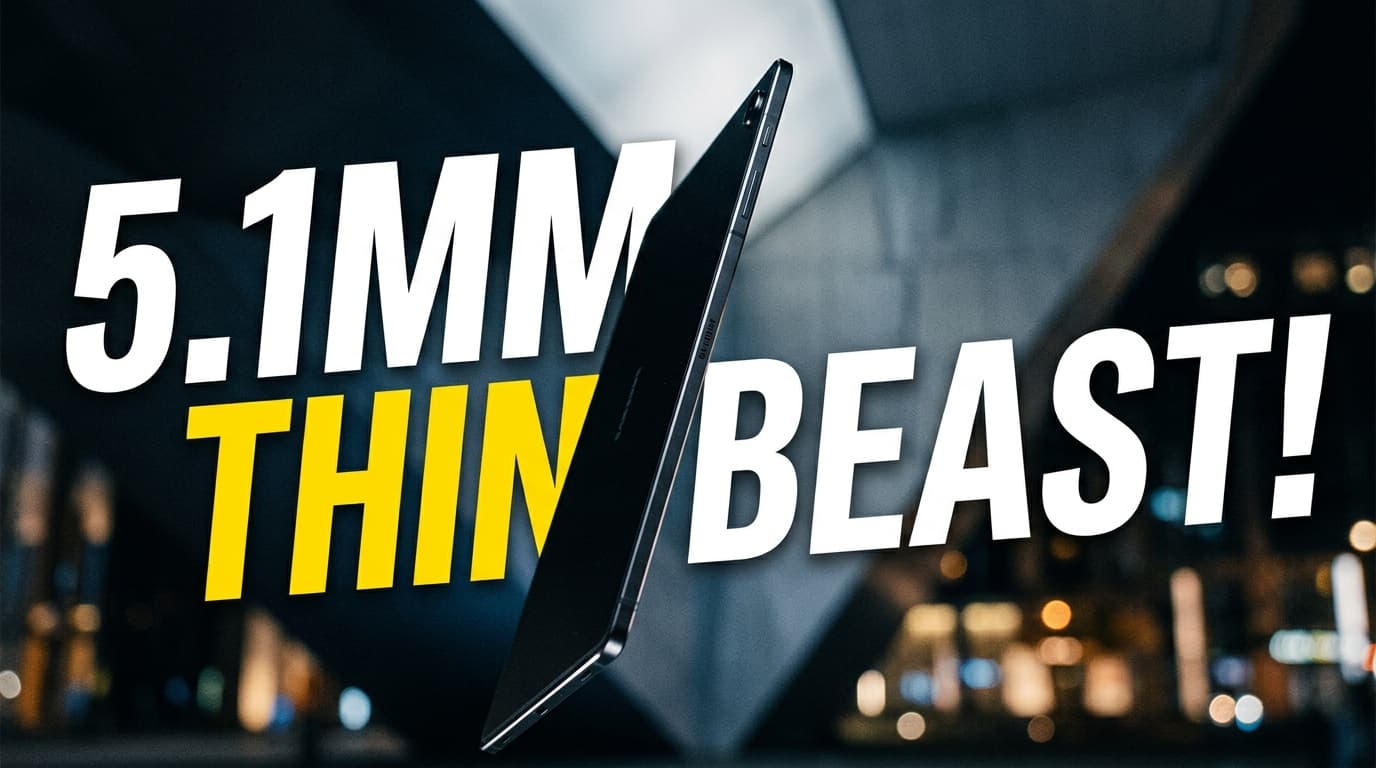
The rumor mill has officially spilled its most guarded secrets regarding Samsung's next premium Android tablets. Freshly leaked 360-degree renders of the Samsung Galaxy Tab S12+ and Galaxy Tab S12 Ultra leave almost nothing to the imagination. With murmurs of a surprisingly thin 5.1mm profile and a controversial processor switch, these upcoming devices look prepared to shake up the high-end tablet market.
Key Takeaways
- High-resolution leaks show the Samsung Galaxy Tab S12+ and S12 Ultra sporting ultra-thin profiles.
- The Ultra model will feature an incredibly slim 5.1mm chassis, making it one of the thinnest premium tablets available.
- Samsung is reportedly ditching Qualcomm in favor of a top-tier MediaTek chip to drive performance.
- Software upgrades include full Tri-AI integration and built-in AI assistants to maximize productivity.
- A massive 50MP rear camera and dedicated Photoshop support indicate a strong pivot toward professional creatives.
Stunning 360-Degree Renders and an Impossibly Thin Profile
The latest batch of leaked images provides a comprehensive look at the physical design of both upcoming models. Tech enthusiasts have spent the last 48 hours analyzing every pixel of these 360-degree renders. The visual evidence points to an aesthetic evolution rather than a complete overhaul, but the dimensional changes are striking. According to the data accompanying the images, the Galaxy Tab S12 Ultra will measure just 5.1mm in thickness. Achieving this level of thinness on a device housing a massive display requires immense engineering precision and advanced internal packaging techniques.
Comparing this to previous generations shows a clear trajectory. Samsung wants its top-tier slates to feel lighter and more manageable for extended handheld use, directly addressing complaints about the bulkiness of massive tablets. The renders of the Samsung Galaxy Tab S12+ reveal a similarly refined design language. We can see uniformly slim bezels surrounding the display, allowing for an immersive viewing experience without accidental palm touches. The back panel retains the familiar magnetic charging strip for the S Pen, but the camera housing has been slightly restyled to accommodate new sensors.
These leaked visuals also suggest a flat-edge design crafted from premium aluminum. This industrial look aligns perfectly with current smartphone trends, offering a secure grip despite the minimal thickness. Users often worry about durability when dealing with ultra-thin hardware. However, Samsung will likely utilize a specialized armor aluminum alloy to prevent structural bending or warping during travel, ensuring the device survives the rigors of daily commuting.
A Massive Shift in Processing Power
Perhaps the most shocking revelation from the recent leaks is the internal hardware powering these machines. Historically, Samsung has relied on Qualcomm Snapdragon processors for its flagship Galaxy Tab S lineup. The new reports indicate a complete departure from this tradition. The Samsung Galaxy Tab S12+ and its larger Ultra sibling will reportedly feature a high-end MediaTek chip.
This processor swap carries significant implications for power efficiency and graphic performance. MediaTek has made incredible strides in the premium silicon space over the last few years. Their recent Dimensity chipsets have matched, and occasionally surpassed, the benchmark scores of their Qualcomm rivals. Here is a breakdown of why this shift matters for tablet users:
- Cost management: Sourcing chips from MediaTek might allow Samsung to offset the costs of the upgraded camera and display components without raising the final retail price.
- Thermal control: MediaTek processors have demonstrated excellent heat dissipation properties, a crucial factor for a device that is only 5.1mm thick.
- Dedicated AI processing: The selected MediaTek silicon likely features a specialized Neural Processing Unit designed specifically to handle complex artificial intelligence tasks locally.
- Battery efficiency: Extended battery life remains a top priority for mobile professionals, and the new architecture could yield better standby times.
While some brand loyalists might express skepticism regarding the change, the raw performance metrics expected from this hardware should put those fears to rest. The tablet market demands sustained performance for multitasking across multiple floating windows, and the chosen MediaTek platform appears fully capable of delivering exactly that.
Tri-AI Integration and Desktop-Class Software
Hardware specifications only tell half the story. The user experience relies heavily on software optimization, and Samsung is clearly doubling down on artificial intelligence. The leaks highlight a brand new feature suite dubbed Tri-AI integration. This system reportedly coordinates three distinct layers of machine learning to anticipate user needs and streamline daily workflows.
The first layer focuses on system optimization, managing background apps and battery drain intelligently to squeeze out every minute of screen time. The second layer powers localized AI assistants capable of parsing complex voice commands, summarizing lengthy documents, and drafting emails without requiring a persistent internet connection. The third layer provides real-time creative assistance, actively helping users generate imagery or format presentations based on contextual clues. This creative focus brings us to another massive leak: native Photoshop support.
Creative professionals have long debated the viability of Android tablets for serious graphic design work. The Samsung Galaxy Tab S12+ and S12 Ultra aim to settle this argument permanently. By partnering directly with Adobe, Samsung has reportedly secured a highly optimized version of Photoshop that taps into the tablet's Tri-AI framework. This allows for rapid image generation, intelligent object removal, and complex layer management directly on the device. The S Pen will act as the perfect input tool for these tasks, offering ultra-low latency and precise pressure sensitivity that mimics real physical media.
Why Include a 50MP Camera on a Tablet?
Tablet cameras have historically been an afterthought. Manufacturers typically equip them with basic sensors meant only for scanning documents or facilitating casual video calls. The Galaxy Tab S12 Ultra is tearing up that playbook by introducing a massive 50MP primary rear camera, fundamentally changing how users might deploy a tablet in the field.
Many consumers might wonder why anyone needs a high-resolution sensor on a giant slab of glass. The answer lies in the intersection of augmented reality and professional workflows. A 50MP sensor captures an extraordinary amount of detail, which is essential for architects scanning room dimensions, real estate agents building 3D virtual tours, or engineers overlaying digital models onto physical spaces.
In addition, content creators can utilize this powerful lens to shoot 4K video and edit the footage natively. The large display acts as an incredible digital viewfinder, providing immediate visual feedback. When paired with the advanced MediaTek image signal processor, this 50MP camera should deliver vibrant colors, excellent dynamic range, and vastly improved low-light performance compared to any previous Galaxy tablet.
For regular users, this hardware upgrade means sharper document scanning, better optical character recognition, and incredibly clear video conferencing. The front-facing cameras are also expected to receive AI-driven enhancements, ensuring you stay perfectly framed during virtual meetings even if you move around the room. The Samsung Galaxy Tab S12+ will likely feature a similarly capable camera system, cementing both devices as serious productivity tools.
Display Technology and the Final Polish
While the renders give us a clear view of the chassis, we must also consider the display technology illuminating these devices. Samsung is the undisputed king of OLED panels, and the upcoming tablets will certainly feature the absolute best screens the company can manufacture. We expect dynamic refresh rates scaling from 1Hz up to 120Hz or even 144Hz, providing incredibly smooth scrolling and gaming experiences while preserving battery life during static tasks.
The 360-degree renders show a refined speaker grille arrangement along the edges. Audio quality is paramount for media consumption, and a quad-speaker setup tuned by AKG is virtually guaranteed. The ultra-thin 5.1mm body might raise concerns about speaker resonance, but advanced acoustic engineering can easily overcome physical limitations to deliver rich, room-filling sound.
Connectivity options will likely include Wi-Fi 7 and Bluetooth 5.4, ensuring rapid data transfers and stable peripheral connections for external keyboards and mice. The shift to a MediaTek chipset could also introduce new modem capabilities, potentially offering faster 5G speeds for the cellular models. Every single detail pulled from these leaks paints a picture of a device designed for absolute zero compromises.
Summary
The leaked renders and accompanying specifications for the Samsung Galaxy Tab S12+ and its Ultra variant reveal a fascinating leap forward in mobile computing. By combining a razor-thin 5.1mm aluminum chassis with unexpected MediaTek processing power and a 50MP camera, Samsung is aggressively targeting both creative professionals and power users. The addition of Tri-AI integration and comprehensive Photoshop support suggests these tablets will function as genuine laptop replacements.
FAQs
When will the Samsung Galaxy Tab S12+ be officially released?
As of the last confirmed reports, Samsung has not provided an official release date. Based on current leak cycles, an official announcement is expected within the next few months.
Does the new tablet feature a Snapdragon processor?
Recent leaks indicate a major shift in strategy. The upcoming flagship tablets are expected to use a high-end MediaTek chip instead of the traditional Qualcomm Snapdragon processors.
How thin is the Galaxy Tab S12 Ultra?
According to the leaked 360-degree renders and dimensional data, the Ultra model features a remarkably slim 5.1mm body. This makes it one of the thinnest premium devices on the market.
Will the tablet support professional editing software?
Yes, the latest reports confirm deep integration with Adobe services. The tablets will feature dedicated Photoshop support enhanced by the device's built-in Tri-AI system.
Why does the new tablet have a 50MP camera?
The high-resolution 50MP camera is designed for advanced augmented reality applications, professional document scanning, and allowing creators to shoot and edit high-quality video on a single device.
Vivo X500 Pro Max and Y600i: 7 Reasons They Just Broke the 2026 Smartphone Market
More in Mobiles
 Mobiles
Why Your New iPhone Battery Drains So Fast (And How to Fix It Today)
 Mobiles
OriginOS 7 Global Release: Is Your Vivo or iQOO Phone Getting the Android 17 Update?
 Mobiles
Honor's Wild Magic9 Pro Max Hardware Teases Will Ruin Mobile Filmmaking Forever
 Mobiles