

Vivo X500 Pro Max and Y600i: 7 Reasons They Just Broke the 2026 Smartphone Market
The latest flagship and budget battery monsters are crushing the competition this September, putting heavyweights like Samsung and Xiaomi on notice.
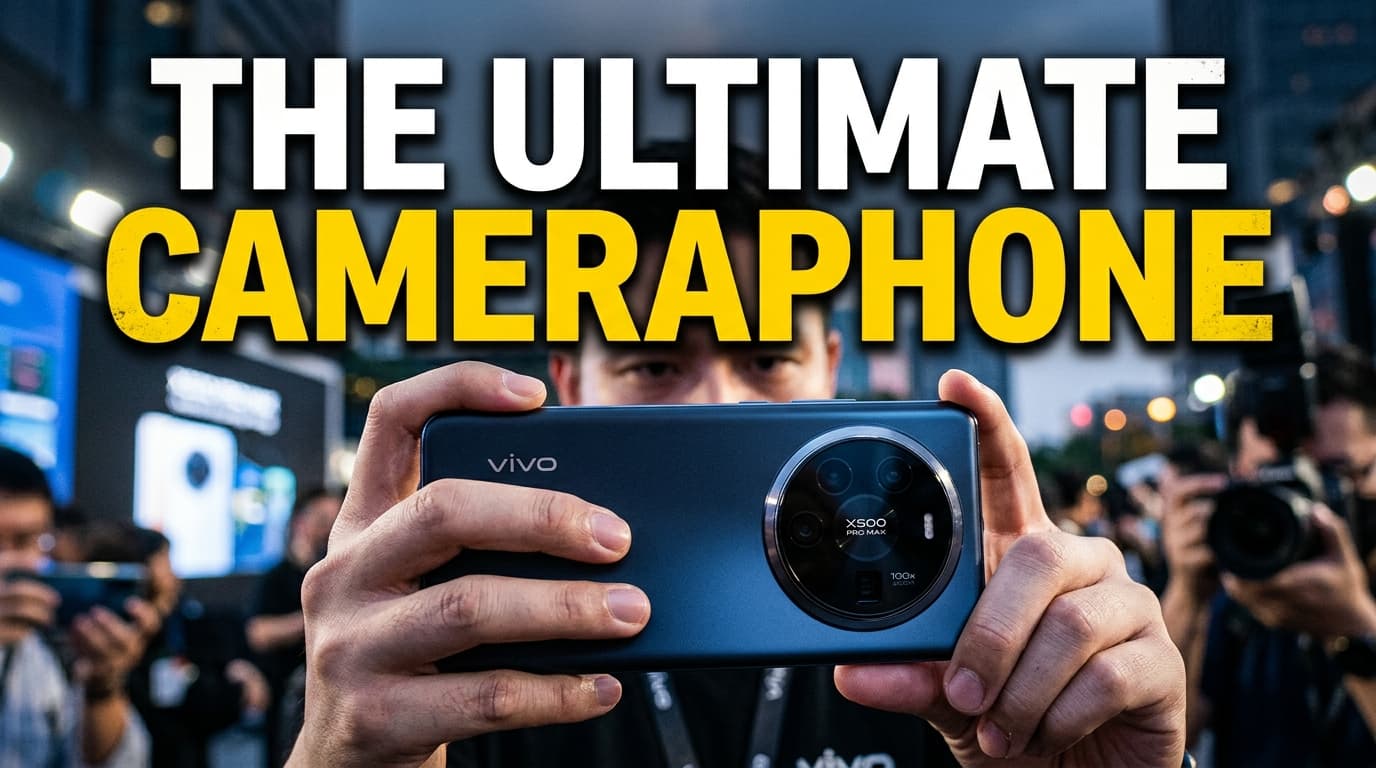
The late 2026 smartphone market has officially shifted into high gear as Vivo delivers a one-two punch that leaves competitors scrambling to justify their latest devices. Between a photography-dominating flagship and a physically imposing budget device with a massive power cell, consumers finally have concrete reasons to upgrade their daily drivers. These new releases highlight a clear strategy: dominate the extreme ends of the mobile spectrum by offering unparalleled camera hardware and unprecedented battery endurance.
Key Takeaways
- The X500 Pro Max establishes itself as a premier cameraphone, directly challenging the Galaxy S26 Ultra in optical performance.
- Significant feature gaps exist between this new premium tier and established competitors like the Xiaomi 18 Pro Max.
- Quietly announced on September 25, the new Y600i packs an astonishing 8,000mAh battery for extreme multi-day endurance.
- Mobile photography enthusiasts and power-hungry users now have highly specialized hardware options that require zero compromises.
The Vivo X500 Pro Max Redefines Mobile Photography
Smartphone optics have plateaued in recent upgrade cycles, but the camera hardware on this new device shatters expectations. Engineers have clearly prioritized optical fidelity over a slim form factor, packing massive image sensors into the rear housing. This approach yields immediate dividends in low-light environments, where larger physical pixels can gather significantly more ambient light without relying exclusively on aggressive software noise reduction. The resulting images maintain natural textures and fine details that typical computational photography often smears or over-sharpens.
Beyond the primary sensor, the telephoto capabilities represent a massive leap forward for mobile zoom. By utilizing a highly advanced periscope lens system, the device achieves optical magnification levels that rival dedicated point-and-shoot cameras. This means users can compress backgrounds and capture distant subjects with striking clarity. The custom image signal processor works in tandem with the physical glass to ensure color consistency across all focal lengths, eliminating the jarring color shifts that normally occur when switching between ultra-wide, standard, and zoom lenses.
Video recording also receives a massive overhaul. The hardware stabilization mechanisms have been enlarged to compensate for heavier hand movements, resulting in cinematic smoothness even during dynamic action shots. Combined with new sensor-level high dynamic range capabilities, the camera can simultaneously expose for bright skies and deep shadows in the same frame at 60 frames per second. This level of video performance firmly establishes the handset as a primary tool for content creators and videographers.
Five Big Gaps: Battling the Galaxy S26 Ultra
Comparing the Vivo flagship against the Galaxy S26 Ultra reveals distinct philosophical differences in how these two tech giants approach premium smartphone design in 2026. Industry analysts have identified five specific areas where these devices diverge sharply.
- Main Sensor Dimensions: The physical size of the primary camera sensor creates the most noticeable gap. A larger sensor inherently captures a wider dynamic range and produces a natural depth of field, rendering the artificial background blur of portrait modes obsolete for many shots. This hardware advantage gives the newer handset a distinct edge in raw image quality.
- Battery Charging Speeds: While the Galaxy maintains conservative charging wattages to preserve long-term battery health, the rival handset pushes wired charging speeds past the 120-watt threshold. This allows users to replenish a completely dead battery to 100 percent in a fraction of the time, changing how people interact with their devices during short layovers or morning routines.
- Thermal Dissipation Area: Sustained performance requires effective cooling. The internal architecture features an expanded vapor chamber cooling system that covers a larger percentage of the motherboard and battery. This translates to higher sustained frame rates during intense gaming sessions and cooler surface temperatures during extended 4K video recording.
- Display Dimming Technology: Eye comfort has become a massive selling point. The integration of ultra-high-frequency pulse-width modulation (PWM) dimming reduces imperceptible screen flicker at low brightness levels. Users who frequently read on their phones in dark environments will experience significantly less eye strain compared to traditional OLED panels.
- Artificial Intelligence Processing: Both devices lean heavily on AI, but their execution differs. One focuses heavily on cloud-based generative tasks, while the other prioritizes on-device processing for immediate camera enhancements and real-time language translation. This local processing approach ensures faster response times and better privacy, as personal data never leaves the handset.
Seven Rounds Against the Xiaomi 18 Pro Max
The premium Android segment is brutally competitive, and the battle against the Xiaomi 18 Pro Max highlights seven distinct rounds of comparison where consumers must weigh their personal priorities.
- Ergonomics and Build Materials: Weight distribution plays a crucial role in daily comfort. While both phones utilize titanium frames and premium glass, the curvature of the back panel and the placement of the massive camera bumps drastically affect how the device balances in a single hand.
- Display Brightness Metrics: Peak brightness numbers have escalated to absurd heights in 2026. Both screens can punch through direct midday sunlight, but the sustained manual brightness levels dictate actual outdoor usability. The calibration of these panels also differs, with one favoring vivid, saturated tones while the other targets reference-level color accuracy.
- Low Light Video Recording: Capturing moving subjects in dimly lit environments remains the toughest challenge for any mobile sensor. The differences in proprietary noise-reduction algorithms become highly apparent when recording video at night, with varying levels of ghosting and artifacting visible in the final output.
- Operating System Fluidity: Custom Android interfaces have matured, but animation speeds and background task management still vary. One interface prioritizes aggressive battery saving by killing background apps, while the other allows more freedom for multitasking at the expense of standby drain.
- Audio Output Quality: Stereo speaker tuning often gets overlooked. The physical size of the bottom-firing speaker chambers dictates bass response and maximum volume without distortion. Consumers who consume media without headphones will notice a distinct difference in vocal clarity and spatial separation.
- Connectivity and Modem Performance: Cellular reception in fringe areas tests the internal antenna design. Differences in the cellular modem and antenna placement can result in slightly better signal retention inside concrete buildings or crowded stadiums, impacting download speeds and call reliability.
- Long-term Value and Support: Hardware degrades, but software dictates a phone's lifespan. The commitment to providing operating system updates and timely security patches for five to seven years has become standard, but the actual delivery speed of these updates remains a major differentiator between the two brands.
The Vivo Y600i Brings an 8,000mAh Battery Behemoth
While the flagship tier fights over camera supremacy, a completely different battle is happening in the budget segment. Quietly revealed on September 25, the new Y600i ignores the trend of ultra-thin designs in favor of extreme practicality. By packing an astonishing 8,000mAh battery into the chassis, the manufacturer has created a device tailored for a very specific, highly demanding demographic.
Most modern smartphones utilize batteries ranging from 4,000mAh to 5,000mAh, which typically provide a single day of moderate use. The massive capacity of the Vivo Y600i mathematically doubles that baseline. For gig economy workers, delivery drivers, and remote field technicians who rely on constant GPS navigation and maximum screen brightness, this level of endurance eliminates the need to carry external power banks or remain tethered to a vehicle charger.
Accommodating such a massive power cell requires physical compromises. The handset is noticeably thicker and heavier than standard models, feeling substantial in the pocket. However, advancements in high-density battery technology have kept the overall footprint manageable. Furthermore, to address the reality of charging such a large battery, the device includes adequately fast charging support, ensuring that a quick 30-minute top-up provides enough power to easily survive a full working day.
Summary
The smartphone market in late 2026 is no longer about incremental, invisible updates that consumers struggle to appreciate. By pushing the absolute boundaries of optical hardware and raw battery capacity simultaneously, the brand has set a massive new standard for the entire industry. Buyers demanding the absolute best in mobile photography or multi-day endurance now have clear, uncompromising frontrunners to consider.
FAQs
What is the battery capacity of the new Y600i?
The newly announced Y600i features a massive 8,000mAh battery. This capacity is designed to provide multiple days of usage on a single charge, targeting heavy users who cannot access power outlets during the day.
How does the new flagship camera compare to the Galaxy S26 Ultra?
The new flagship camera focuses heavily on larger physical sensor dimensions and advanced periscope telephoto lenses. This hardware advantage allows it to capture more natural light and depth compared to the S26 Ultra, which relies slightly more on computational processing.
When was the Y600i officially announced?
The budget battery monster was quietly revealed to the public on September 25, 2026. It immediately grabbed attention due to its unusually large power capacity.
Does the new flagship beat the Xiaomi 18 Pro Max?
Choosing between them depends entirely on user priorities. While one offers superior primary sensor size and fast charging speeds, the Xiaomi 18 Pro Max remains highly competitive in ergonomics, display tuning, and overall software ecosystem integration.
Are these new smartphones available globally?
Release availability varies by region. While the flagship models typically see a wide international rollout shortly after their initial launch, specific budget models with extreme battery sizes are sometimes restricted to select markets based on regional demand.
Why Your New iPhone Battery Drains So Fast (And How to Fix It Today)
More in Mobiles
 Mobiles
OriginOS 7 Global Release: Is Your Vivo or iQOO Phone Getting the Android 17 Update?
 Mobiles
Honor's Wild Magic9 Pro Max Hardware Teases Will Ruin Mobile Filmmaking Forever
 Mobiles
Google's Pixel Phones Just Got 5 New Features, and One Might Save You From Scams
 Mobiles