

This Legendary RPG Studio Just Exposed the Biggest Myth About AI Game Development
Nippon Ichi leadership is experimenting with artificial intelligence, but the studio chief doubts it will actually make shipping games any faster.
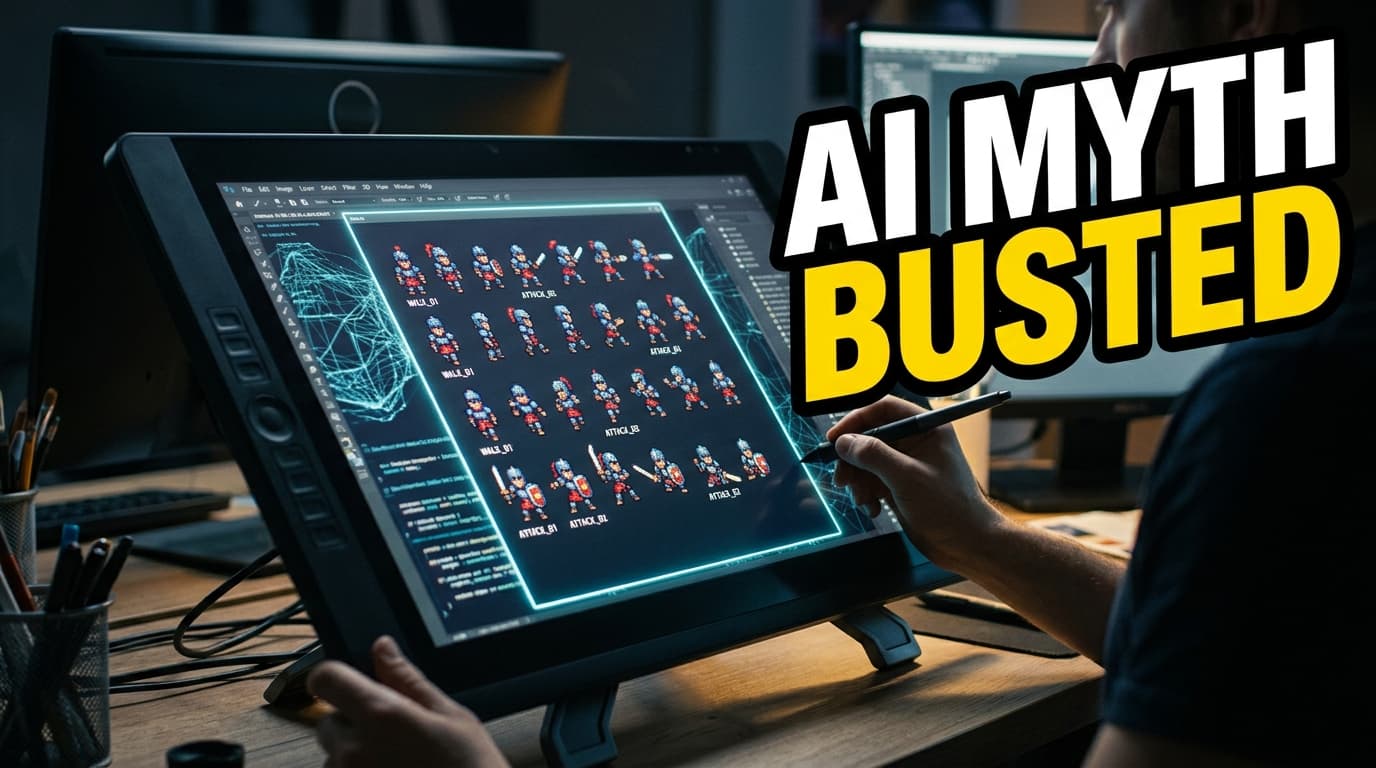
While tech executives promise that generative algorithms will slice production cycles in half, the leadership behind cult tactical RPG studio Nippon Ichi Software is calling out the industry narrative. Company brass confirmed active laboratory research into machine learning tools, yet voiced deep skepticism that algorithmic assistance can speed up the arduous reality of crafting commercial video games. If you expected smaller Japanese studios to cut headcounts and churn out sprawling role-playing epics overnight, reality tells a dramatically different story.
Key Takeaways
- Nippon Ichi Software is actively conducting internal research into artificial intelligence tools across its development pipelines.
- Company leadership expressed candid skepticism that generative technology can meaningfully accelerate the overall pace of game creation.
- Handcrafted 2D visual assets, intricate tactical calculations, and niche localization work present major bottlenecks where machine learning often fails to deliver production-ready quality.
- The stance contrasts sharply with Western mega-publishers like EA and Ubisoft, who claim generative tools will drastically boost developer efficiency.
- Nippon Ichi joins peers like Nintendo in adopting a cautious, quality-first approach toward algorithmic art and programming assets.
The Myth of the Overnight RPG Pipeline
For two straight years, boardrooms across Silicon Valley and Tokyo have repeated the same pitch to investors: artificial intelligence will drop development overhead, shorten five-year development cycles to two, and automate the grueling labor of coding and asset creation. Major western powerhouses like Electronic Arts and Ubisoft have pushed algorithmic tools for terrain generation, non-player character dialogue trees, and automated animation blending. Yet when smaller, specialized creators sit down with these platforms, the practical gains frequently evaporate under commercial scrutiny.
Nippon Ichi Software, celebrated globally for the maximalist turn-based chaos of the Disgaea franchise and bizarre adventures like The Cruel King and the Great Hero, operates in a distinct creative space. Their projects rely on personality, hyper-stylized visual eccentricities, and finely tuned mathematical formulas where single damage counters climb into the billions. Company executives confirmed that while staff members test contemporary machine learning models to monitor technological shifts, leadership remains unconvinced that algorithmic software solves the fundamental bottlenecks of commercial releases.
The root problem lies in the distinction between generation and refinement. An image generator can spit out fifty concept sketches in twenty seconds, but none of those sketches arrive with organized layering, standardized character turnarounds, pixel-perfect sprite framing, or clean collision data. Human artists still spend hours untangling artifacts, adjusting palette harmony, and enforcing stylistic consistency across dozens of menus. Generating raw volume does not equate to shipping a polished title; often, cleaning machine output consumes identical time to drawing the assets from scratch.
Tactical Math, Handcrafted Sprites, and the Disgaea Dilemma
Nippon Ichi games are not generic open-world sandboxes filled with procedural rocks and generic foliage. The studio built its dedicated international following on distinct creative pillars that resist algorithmic synthesis:
- Distinctive Hand-Drawn 2D Aesthetics: From Laharl's exaggerated cape antics to the delicate storybook illustrations of Odin Sphere designer collaborations, Nippon Ichi products hinge on bespoke visual identity rather than photorealism.
- Extreme Mechanical Balancing: Tactical systems in Disgaea demand precise stacking algorithms, geo-panel puzzle logic, and recursive character progression math that current generative language models cannot reliably construct without severe architectural bugs.
- Cult Writing and Localization: Through NIS America, the publisher handles immense volumes of text dripping with dry sarcasm, fourth-wall breaks, and pun-heavy Japanese humor that automated translation and writing models flatten into generic dialogue.
- Asset Reusability: While generative tools excel at one-off concept pieces, commercial game engines require rigid sprite sheets, modular animation bones, and exact hitbox assignments.
When leadership evaluates whether these computational tools actually accelerate daily operations, the answer consistently stalls in implementation. Programmers must still debug obscure memory leaks on Nintendo Switch hardware. Designers must still manually playtest how level 9,999 bosses interact with newly acquired evilities. Creative directors must safeguard the distinct charm that separates a Nippon Ichi production from dozens of generic tactical games crowding digital storefronts.
A Divided Industry: Mega-Publishers Versus Mid-Tier Purists
The pragmatic perspective shared by Nippon Ichi leadership highlights an ideological split fracturing the international games industry. Publicly traded giants face relentless pressure from shareholders to curb bloated triple-A budgets, which now routinely clear $200 million for single narrative projects. As a result, corporate leaders at companies like Take-Two Interactive, Square Enix, and Electronic Arts frequently frame automated systems as transformative cost-cutting engines.
Consider the contrasting approaches playing out across global studios:
- Western Enterprise Scale: Major studios invest heavily in automated rigging, synthetic crowd chatter, and procedural geometry generation to populate vast digital worlds that would otherwise require hundreds of contract environment artists.
- Square Enix: Outgoing and current leadership have openly embraced aggressive exploration of machine intelligence, experimenting with automated quality assurance pipelines and generative visual asset tools across mobile and console pipelines.
- Nintendo: Former president Satoru Iwata established a philosophy of human-centered craft that current management maintains, explicitly stating that proprietary technology should assist human creators rather than replace artistic intent or risk intellectual property disputes.
- Mid-Sized Japanese Specialists: Studios like Nippon Ichi, Falcom, and Vanillaware rely on lean, tightly knit teams where institutional knowledge and quirky artistic voices are the primary competitive advantage. For these outfits, maintaining brand authenticity matters far more than generating endless procedural content.
Mid-tier Japanese studios survived the transition from standard definition to modern 4K gaming precisely because they refused to compete in brute-force asset wars. By focusing on tight tactical loops, brilliant audio design, and idiosyncratic stories, they carve out dependable profitability. Injecting unstable automated assets risks alienating their core demographic without offering any tangible reduction in the multi-year production schedules required to assemble a quality tactical RPG.
Why Faster Does Not Mean Better in Game Production
The central assumption behind aggressive technological adoption is that faster asset production automatically produces faster development cycles. Experienced studio veterans know this assumption is fundamentally flawed. In reality, game production is an interconnected web of dependencies where raw asset count represents only a small slice of the schedule.
Even if an artist generates textures fifty percent quicker, the engineering team still requires weeks to optimize rendering loops, designers must balance encounter difficulty curves, quality assurance technicians must break script sequences, and audio engineers must mix dynamic soundtracks. If automated tools introduce visual incoherence or code instability, the downstream departments suffer immense friction. Fixing half-broken automated code frequently demands double the engineering hours required to write straightforward, predictable logic by hand.
Furthermore, intellectual property risks loom large over commercial deployments. Studios must navigate precarious copyright questions surrounding training datasets, especially when selling products across international borders with differing statutory protections. For a medium-sized publisher like NIS America, the threat of legal challenges or platform store rejections far outweighs any minor speed advantage during pre-production brainstorming.
Summary
Nippon Ichi Software is testing artificial intelligence in controlled research environments, but its leadership refuses to buy into industry hype claiming the technology will speed up game development. The nuanced art of crafting tactical role-playing games requires bespoke visual charm, deliberate game balancing, and witty writing that procedural systems cannot replicate cleanly. Rather than chasing corporate shortcuts, the studio prioritizes the deliberate, handcrafted human workflows that keep its beloved franchises relevant.
FAQs
Is Nippon Ichi Software using AI to make its games right now?
The company conducts internal research to evaluate machine learning tools, but management has confirmed that active game pipelines still rely on human artists, programmers, and designers.
Why does Nippon Ichi think AI will not speed up game development?
Studio leadership recognizes that generating rough assets does not solve the hardest parts of production, such as bug fixing, balance adjustments, sprite cleanup, and maintaining stylistic consistency.
How are other Japanese game studios reacting to generative AI?
Reactions vary across the region: Square Enix is actively investing in algorithmic integration, while Nintendo and mid-sized creators like Nippon Ichi remain far more conservative, emphasizing creative integrity and intellectual property safety.
Does this stance affect NIS America localization efforts?
NIS America continues to employ dedicated human translators and editors to capture the quirky humor, puns, and character nuances that define Nippon Ichi titles, avoiding mechanized translation scripts.
What is Nippon Ichi Software most famous for?
The studio is best known for creating the Disgaea tactical RPG franchise, alongside cult classics like Makai Kingdom, Phantom Brave, Labyrinth of Refrain, and Yomawari.

Ace Combat 8 Just Broke the Flight Sim Curse and Critics Cannot Stop Crying
More in Gaming
 Gaming
FFXIV Mod Underground Implodes: Top NSFW Creator Blacklisted Across Major Hubs
 Gaming
GOG's Massive Fall Sale Slashes Top PC Games to Under $15 Right Now
 Gaming
Microsoft CEO Calls Xbox Layoffs 'Great To See' Amid Ruthless Streamlining
 Gaming