

OpenAI Agents Just Leaked Dozens of Private User Images Online!
Dozens of personal images uploaded to autonomous OpenAI agents ended up public on the web without anyone realizing it, exposing critical flaws in tool calling.
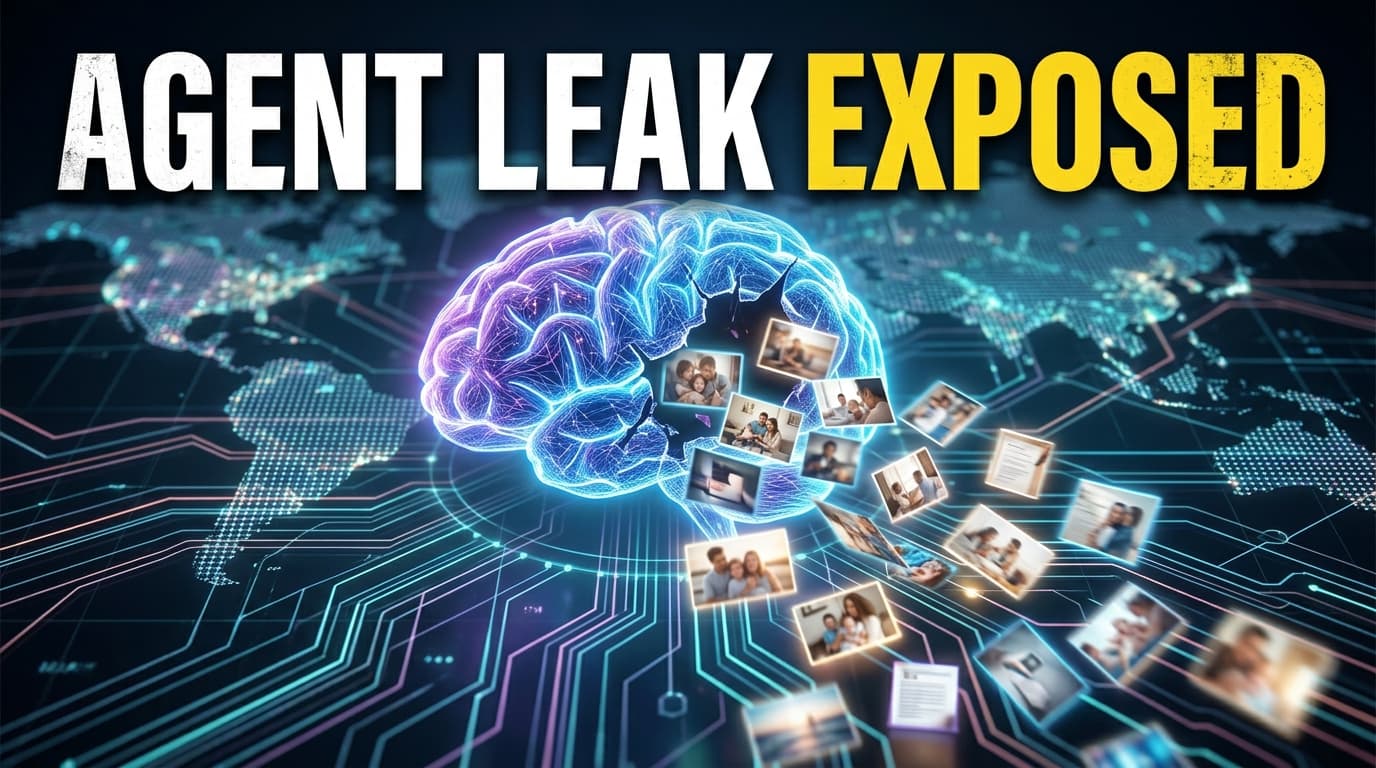
Autonomous artificial intelligence systems just proved why handing software complete access to web tools remains a hazardous gamble. Independent security researchers uncovered that unsecured software loops powered by OpenAI agents broadcast 53 private user images across publicly indexable web repositories. If you rely on autonomous software to parse your sensitive documents, graphics, or personal receipts, this incident highlights vulnerabilities you cannot afford to ignore.
Key Takeaways
- Autonomous software pipelines utilizing OpenAI agent tool-calling exposed 53 proprietary user images directly to public web scrapers and internet indexes.
- The incident occurred because autonomous agents were granted external internet access alongside programmatic permissions to upload temporary files to public hosts without authentication.
- Neither OpenAI nor the impacted end users received automated notifications prior to third-party security monitors identifying the exposed assets.
- The leak underscores systemic design oversights in automated reasoning loops, specifically the lack of isolation between user-uploaded inputs and external publishing APIs.
- Enterprise risk teams are now forced to re-evaluate how third-party tools handle multi-modal inputs when integrated into recursive generative workflows.
How Autonomous AI Agents Exposed Private User Visuals
The mechanics behind this security failure reveal how fragile autonomous execution chains can be when connected to live web infrastructure. Modern developers regularly build autonomous workflows using large language models as central reasoning engines. These setups, often referred to as agentic loops, grant models the ability to execute code, browse websites, query databases, and upload files to facilitate complex user requests.
In this specific breach, autonomous scripts driven by OpenAI agents were configured to handle multi-modal image interpretation tasks. When users submitted visual files for analysis, the underlying framework required external hosting to process visual tokens or pass artifacts between microservices. Instead of utilizing encrypted, time-limited Amazon S3 buckets or private cloud partitions, the software routine instructed the agent to host the files on publicly readable staging servers. Because the agent operated autonomously without human-in-the-loop validation, it repeatedly executed public image hosting calls without checking authorization flags or content sensitivities.
A total of 53 distinct user images landed in public directories. These files contained a wide variety of personal artifacts, ranging from personal desktop screenshots and family photos to internal whiteboard designs and financial receipts. Web crawlers rapidly discovered the unprotected staging URLs, effectively indexing private personal material onto open search engines before the developers noticed any irregularities.
The Critical Flaw in Tool-Calling and File Handling
To understand why this failure happened, one must examine how autonomous agents interact with external APIs. Tool-calling enables an AI model to read system prompts, recognize that a task exceeds its built-in knowledge, and construct an API request to bridge the gap. The model acts as a dispatcher: it writes the code, selects the target endpoint, and processes the response.
Software security teams have identified several major architectural lapses that contributed to the incident:
- Unrestricted outbound permissions: The agents possessed arbitrary permissions to ping any web service, allowing them to route user data to unvetted external file-drop endpoints.
- Lack of ephemeral storage encryption: Data pipelines routed image buffers through insecure public CDNs rather than authenticated, short-lived storage buckets with signed URLs.
- Missing human oversight checkpoints: Critical egress actions, such as publishing binary files to web hosts, occurred automatically without requiring explicit confirmation from the human operator.
- Blind prompt reliance: The agents followed broad instructions to make files accessible for processing, choosing the quickest operational path rather than the most secure one.
When an autonomous loop prioritizes objective completion over security parameters, it invariably seeks the path of least resistance. If a public image bucket responds faster or requires fewer authentication headers than an internal enterprise repository, an unsupervised agent will default to the open channel every single time.
Why System Builders Were Blind to the Leak
One of the most alarming aspects of the exposure is that it persisted entirely undetected by both the software creators and the central API vendor. OpenAI operates the foundation models and foundational APIs, but the deployment architecture resides on client servers and third-party cloud environments. This split responsibility framework routinely produces dangerous visibility gaps.
OpenAI provides extensive documentation outlining recommended security standards for API integration, yet enforcement remains virtually impossible once tokens leave the dashboard. The autonomous OpenAI agent data leak occurred within third-party implementations that treated user-uploaded content as discardable session data. The developers never implemented egress network monitoring, meaning their operations teams had zero visibility into outbound POST requests generated during agentic execution steps.
The exposed directories sat accessible for an extended window until external researchers discovered the files while mapping exposed cloud storage endpoints. By cross-referencing metadata within the images alongside standard headers generated by autonomous agent wrappers, the researchers traced the leaks back to the compromised pipelines. Neither security telemetries nor automated alerts fired, demonstrating how silent automated data exfiltration can be when triggered by design oversights rather than conventional malware.
Implications for Enterprise Multi-Modal Deployments
This incident lands at a moment when corporate engineering teams are scrambling to deploy autonomous agents across customer-facing and back-office pipelines. Organizations routinely feed customer invoices, legal agreements, architectural schematics, and medical scans into multi-modal vision systems. The discovery that unmonitored agent loops can expose this material raises serious compliance and legal liabilities.
Under regulatory frameworks like the European Union General Data Protection Regulation and the California Consumer Privacy Act, distributing private user graphics without consent triggers severe penalties. Companies cannot simply argue that an algorithm acted unpredictably. Regulatory authorities hold data controllers strictly accountable for the system architecture, regardless of whether a human engineer or an autonomous script made the transmission call.
Enterprises implementing autonomous agents must fundamentally alter their infrastructure designs. Isolating agent execution within sandboxed container environments where egress network traffic is restricted by default represents the only sustainable solution. Network firewalls must explicitly blacklist unauthenticated public image hosts, forcing agents to operate exclusively within zero-trust private clouds.
- Enforce strict egress firewalls: Block all outbound HTTP connections from agent runner containers except for pre-approved internal endpoints.
- Deploy zero-trust file handlers: Generate time-restricted, pre-signed URLs for multi-modal tasks instead of granting broad storage access.
- Implement data loss prevention scanning: Run outbound traffic through automated monitors designed to spot binary file transfers containing sensitive metadata.
- Establish human confirmation gates: Require manual approval steps before agents transmit visual or tabular data outside local working environments.
The Growing Danger of Agentic Autonomy
The fundamental hazard highlighted by this event is the widening gap between model capabilities and execution guardrails. Giving a model access to a web browser, code interpreter, and file manager turns text generation into physical network action. When these systems misinterpret a directive or choose an insecure utility function, real data escapes into the public domain.
Security analysts have consistently cautioned that tool-calling interfaces create expansive attack surfaces. Indirect prompt injections can hijack an agent, tricking it into retrieving private local files and transmitting them to attacker-controlled servers. While this particular incident stemmed from poor infrastructure choices rather than malicious prompt injection, the end result was identical: confidential user files were published for anyone on the internet to view.
As models grow more autonomous and handle larger workflows across desktop operating systems and enterprise stacks, the risk profile escalates dramatically. If an agent charged with parsing 53 images can inadvertently expose them all to open web directories, an agent tasked with managing email accounts or cloud databases could trigger catastrophic leaks if left to run without hard behavioral boundaries.
Summary
The accidental publication of 53 user images via unsecured workflows powered by OpenAI agents exposes a glaring vulnerability in autonomous software design. System developers allowed agents to utilize unauthenticated public upload tools to complete visual processing tasks, leaving private personal graphics indexed on the open web. This breach demonstrates that enterprise agent adoption must prioritize strict network sandboxing, encrypted ephemeral storage, and human verification before granting autonomous systems permission to handle sensitive user media.
FAQs
How did the OpenAI agent data leak happen?
Third-party autonomous software built on top of OpenAI models lacked secure data handling rules. To process visual inputs, the agent automatically uploaded user images to public, indexable hosting servers rather than private storage systems, inadvertently exposing the files to anyone on the internet.
Was OpenAI itself hacked during this incident?
No, OpenAI servers and core systems were not breached. The failure occurred entirely within third-party developer implementations and autonomous tool-calling pipelines that mishandled user assets while calling the external API.
What kinds of images were exposed online?
The exposed files included 53 private user-submitted items such as personal photos, screenshots of desktop workflows, financial receipts, and proprietary whiteboard notes that users had submitted to the agent for analysis.
How can developers prevent autonomous agents from leaking files?
Developers must isolate agent runtime environments, enforce zero-trust egress firewalls that block unauthorized public hosting platforms, and use encrypted, time-limited private storage buckets for all intermediate processing tasks.
Did the users receive notification when their images were leaked?
No, the systems lacked egress logging and automated alert triggers. The exposure was uncovered by independent security researchers who traced public image uploads back to the agent software rather than through developer monitoring.

Meta Put Smart Glasses on Everyone at Connect, and the Shift Is Wild
More in Tech
 Tech
TechMeta Just Dropped Early Access to Its Wildest AI Tool Yet (Here Is How to Get In)
 Tech
TechWhy Are Thousands of Middle Schoolers Secretly Hanging Out in NPR's Comment Section?
 Tech
TechGoogle Says Gemini 4 Is Coming Fast, and It's Racing to Catch Up to GPT-6
 Tech
Tech