

UK's Biggest Tabletop Show Just Banned AI Art: Here Are the Only Exceptions
The UK Games Expo has officially prohibited generative AI across its show floor, establishing tough rules to protect human creators with only minimal exceptions.
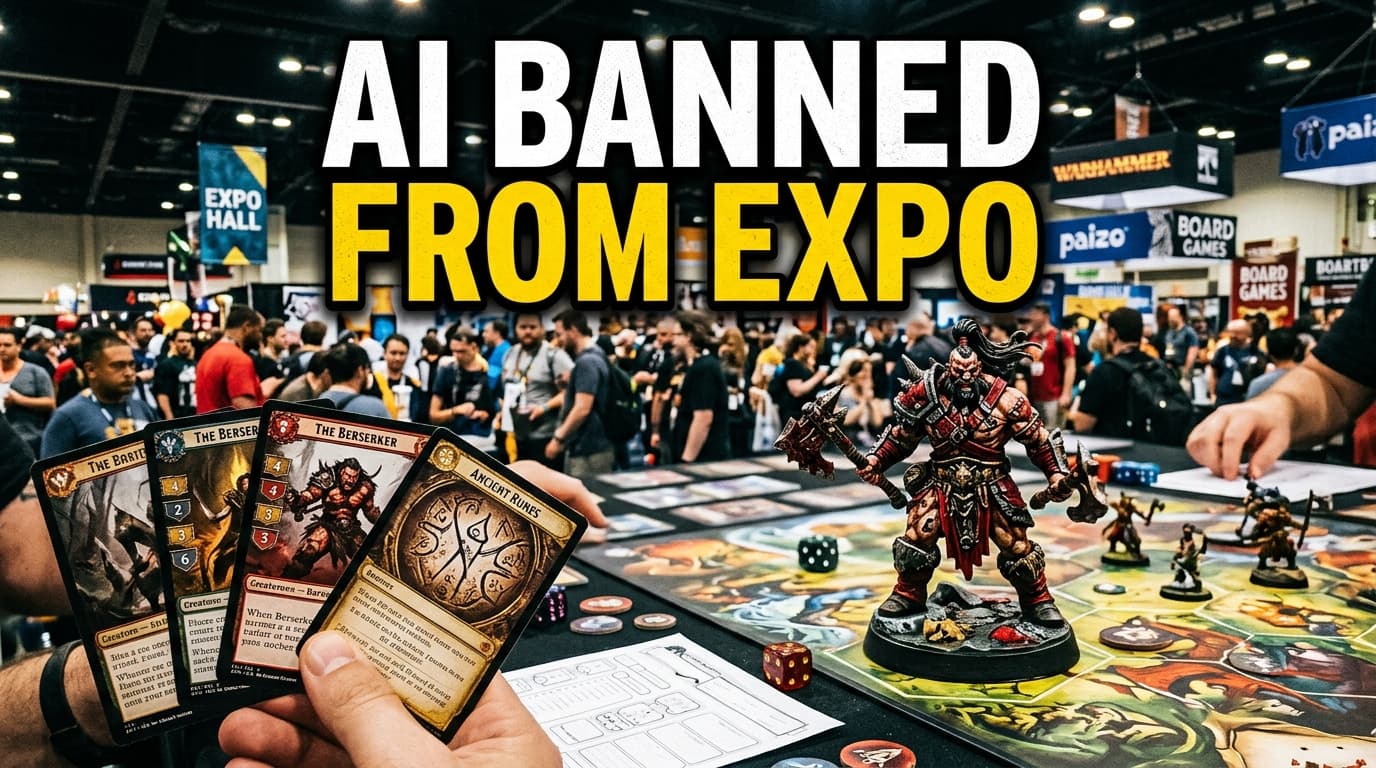
Organizers behind the UK's largest tabletop gaming gathering have drawn a firm boundary against machine-generated content, rolling out an aggressive prohibition on artificial intelligence across commercial and artistic exhibition spaces. Tabletop hobbyists and independent creators now face a radically altered trade floor where generative tools are strictly unwelcome. Here is the full breakdown of how this decisive tabletop convention AI ban works, which rare exemptions survived the cut, and what this shift means for the global board gaming industry.
Key Takeaways
- The UK Games Expo, the premier hobby convention in the United Kingdom, has enacted a formal ban on generative AI content across exhibitor stands and artist alleys.
- The policy specifically targets AI-generated visual art, marketing collateral, written rulebooks, and lore materials intended for sale or public display.
- Exceptions remain exceedingly narrow, limited primarily to foundational assistive accessibility tools, general spell-checking software, and pre-approved conceptual experiments.
- Exhibitors caught violating the rules risk immediate expulsion from the convention floor without a refund, alongside prospective multi-year event bans.
- The decision follows intense pressure from illustrators, miniature sculptors, and independent designers seeking to preserve human labor in physical gaming spaces.
The Crackdown: Inside the Landmark Tabletop Convention AI Ban
The decision to scrub generative synthetic assets from the exhibition halls of the National Exhibition Centre in Birmingham marks one of the most assertive regulatory steps taken by any major gaming convention to date. Tabletop events have long served as vital financial lifelines for freelance illustrators, indie game studios, and miniature sculptors. When automated image synthesis and language models flooded online storefronts, convention organizers found themselves caught between cost-cutting publishers and an infuriated creative community.
By putting this tabletop convention AI ban into effect, event leadership has established a definitive answer to months of escalating controversy. Exhibitors registering for upcoming floor space must explicitly sign off on creative transparency declarations. Under these terms, sellers verify that the physical products, promotional banners, standalone prints, and bundled instructional texts brought into the venue were produced through genuine human craftsmanship rather than algorithmic scraping engines.
Enforcement will not rely solely on an honor system. Event staff, accompanied by experienced art industry advisors, will conduct active walkthroughs across the dealer rooms and artist spaces. If a vendor faces credible reports of peddling synthetic wares, convention authorities retain the contractual right to review project source files, design iterations, or preliminary sketches before making an expulsion determination.
What Gets Blocked vs. Permitted: The Strict Fine Print
Convention organizers recognized early in the drafting process that blanket prohibitions require meticulous definitions to prevent confusion. Generative technologies manifest across multiple stages of modern manufacturing, so the official policy divides digital tools into distinct regulatory categories.
- Forbidden: Generative Art and Illustration. Any visual asset generated through prompt-driven image synthesis platforms like Midjourney, Stable Diffusion, or commercial stock pools derived from algorithmic scraping is completely barred from merchandise, booth decoration, and box art.
- Forbidden: Synthetic Text and Narrative Lore. Tabletop roleplaying game manuals, card text, worldbuilding compendia, and marketing flyers created via automated large language models cannot be displayed or sold.
- Forbidden: AI-Generated 3D Sculpting Assets. Mesh files and resin miniatures produced by feeding reference prompts into automated geometry generators are expressly banned from physical merchant stalls.
- Allowed: Standard Assistive Digital Software. Digital painting applications featuring standard procedural tools, such as basic Photoshop healing brushes, perspective grids, and custom digital paintbrushes controlled directly by a human stylist, remain fully accepted.
- Allowed: Accessibility and Editorial Grammar Tools. Basic spell-checking utilities, text-to-speech assistive devices for disabled players, and standard translation dictionaries are entirely exempt from the restriction.
- Restricted Exception: Games About AI Mechanics. Projects that explore artificial intelligence as a conceptual theme or narrative subject may incorporate synthetic assets only if organizers grant advance written authorization and the retail packaging displays prominent, unmissable consumer disclosures.
Vendors who attempt to skirt these provisions by laundering algorithmic images through superficial overpainting face severe administrative penalties. Organizers have clarified that light human manual tracing over a generated base plate fails to meet the human origin threshold, rendering such merchandise subject to immediate confiscation from display racks.
Why the Tabletop Community Demanded a Hard Line
Board games, card games, and tabletop roleplaying adventures occupy a unique cultural position. Unlike digital video games, where asset pipelines are frequently invisible to the end user, physical hobby games emphasize tactile presence and visible artistry. A consumer buying a deluxe boxed board game often does so because of the striking cover illustration, the intricate hand-sculpted plastic figures, and the carefully crafted narrative voice in the rulebook.
Over the past two years, several prominent crowdfunding campaigns on platforms such as Kickstarter and Gamefound suffered catastrophic community boycotts after backers detected synthetic imagery in preview documents. Backers voiced fury that project creators sought tens of thousands of dollars while substituting human artists with algorithmic prompt tools. For convention attendees spending substantial sums on weekend travel, hotel accommodations, and collector prints, encountering stalls filled with machine outputs produced in seconds felt like an insult to the gathering's spirit.
Artist Alley vendors were especially vocal in lobbying for this decisive tabletop convention AI ban. Independent artists survive on direct-to-consumer print sales to offset rising exhibition booth fees. When unauthorized print shops set up adjacent tables piled high with hundreds of synthetic fantasy portraits, they underprice human illustrators who spent weeks on a single canvas. The convention's intervention guarantees that booth fees invest in an authentic, protected creative ecosystem rather than an automated print-on-demand bazaar.
Global Ripple Effects: Pressure Mounts on Gen Con and Essen Spiel
The bold enforcement stance adopted in Birmingham sends shockwaves far beyond British borders. The global hobby calendar revolves around a triad of massive gatherings: Gen Con in Indianapolis, Internationale Spieltage (Essen Spiel) in Germany, and the UK Games Expo. Historically, regulatory actions taken by one show prompt rapid scrutiny of policies at the others.
Gen Con previously updated its guidelines to ban machine-generated artwork from its dedicated Artist Alley, but broad commercial dealer hall rules left loopholes that frustrated attendees. Essen Spiel encountered similar friction when attendees discovered synthetic graphics decorating retail publisher booths across the German convention halls. Now that Britain's primary tabletop convention AI ban has codified enforceable standards across both artistic and commercial exhibitor sections, international organizers face renewed calls to harmonize their rulebooks.
Industry advocacy groups point out that fragmented international rules create logistical headaches for multinational board game publishers. A publisher planning a global rollout across Europe and North America cannot afford to print two separate editions of a game: one compliant with strict British event standards and another filled with machine-assisted assets for more permissive territories. Consequently, this regional convention mandate possesses sufficient commercial leverage to nudge global publishing pipelines back toward human creative contracts.
How Publishers and Independent Creators Must Prepare
Exhibitors preparing inventory for upcoming convention cycles must adjust their production and verification workflows immediately to guarantee total compliance. Ignorance of an asset's provenance will no longer shield a distributor or retailer from punitive action on the trade floor.
- Audit Freelancer Contracts: Publishers must update their freelance agreement templates to mandate written warranties from contract illustrators and writers confirming that zero generative machine models contributed to the final deliverables.
- Preserve Working Project Files: Independent illustrators should systematically archive layered PSD files, preliminary sketch concepts, thumbnail drafts, and time-lapse recordings. If a floor inspector raises questions, having verifiable process trails eliminates suspicion instantly.
- Screen Third-Party Resale Merchandise: Retailers who purchase bulk novelty goods, dice bags, or gaming mats from third-party wholesale distributors must exercise rigorous due diligence. Selling imported synthetic merchandise purchased from third parties still constitutes a direct policy breach.
- Apply for Thematic Exemptions Early: Designers creating experimental titles specifically satirizing or exploring synthetic machine cognition must submit their mechanical outlines and asset disclosures months in advance of the exhibition weekend to secure valid documentation.
These operational shifts require extra diligence, yet commercial entities that respect the initiative will find an enthusiastic audience waiting for them. The tabletop consumer demographic has demonstrated repeatedly that it is willing to pay premium prices for verified human craftsmanship, transparent production ethics, and creative integrity.
Summary
The definitive tabletop convention AI ban established by the UK's largest hobby gaming expo draws a clear line between algorithmic automation and authentic creative expression. By closing loopholes for visual art, written rulebooks, and 3D modeling while leaving narrow exemptions for basic accessibility tools, the convention safeguards human livelihood across its show floor. This policy not only protects local artists at the NEC Birmingham but also places substantial pressure on international conventions worldwide to follow suit.
FAQs
Which convention instituted this new generative software policy?
The UK Games Expo, which stands as the largest annual tabletop gaming convention in the United Kingdom, instituted this comprehensive regulatory framework.
Are human artists allowed to use digital tools like Photoshop?
Yes, standard digital art programs and digital stylus equipment are completely acceptable, provided the work relies on direct human illustration rather than algorithmic image synthesis.
What happens if a vendor is caught selling prohibited synthetic art?
Vendors found violating the regulation will have their unauthorized items removed immediately, face potential eviction from the venue without financial compensation, and risk future attendance bans.
Are games with synthetic assets allowed if they contain prominent disclaimer labels?
No, consumer warning labels alone do not bypass the ban; only specialized projects with advance administrative approval centered specifically on artificial intelligence themes are permitted.
Does the restriction apply to digital grammar or spell-check programs?
No, routine editorial utilities like grammar checkers, basic digital spell-checking functions, and accessibility software for disabled players are fully exempt from the policy.
Why Grand Theft Auto VI Might Break Current Consoles: Inside Rockstar's Tech Leap
More in Tech
 Tech
TechOpenAI Agents Just Leaked Dozens of Private User Images Online!
 Tech
TechMeta Put Smart Glasses on Everyone at Connect, and the Shift Is Wild
 Tech
TechMeta Just Dropped Early Access to Its Wildest AI Tool Yet (Here Is How to Get In)
 Tech
Tech