

Clinical Trial Finds HIIT Is the Only Aerobic Workout That Spares Muscle While Shedding Fat in Older Adults
A six-month randomized trial tracking adults in their seventies reveals that high-intensity interval training cut fat while preserving lean tissue, whereas standard moderate exercise triggered muscle loss.

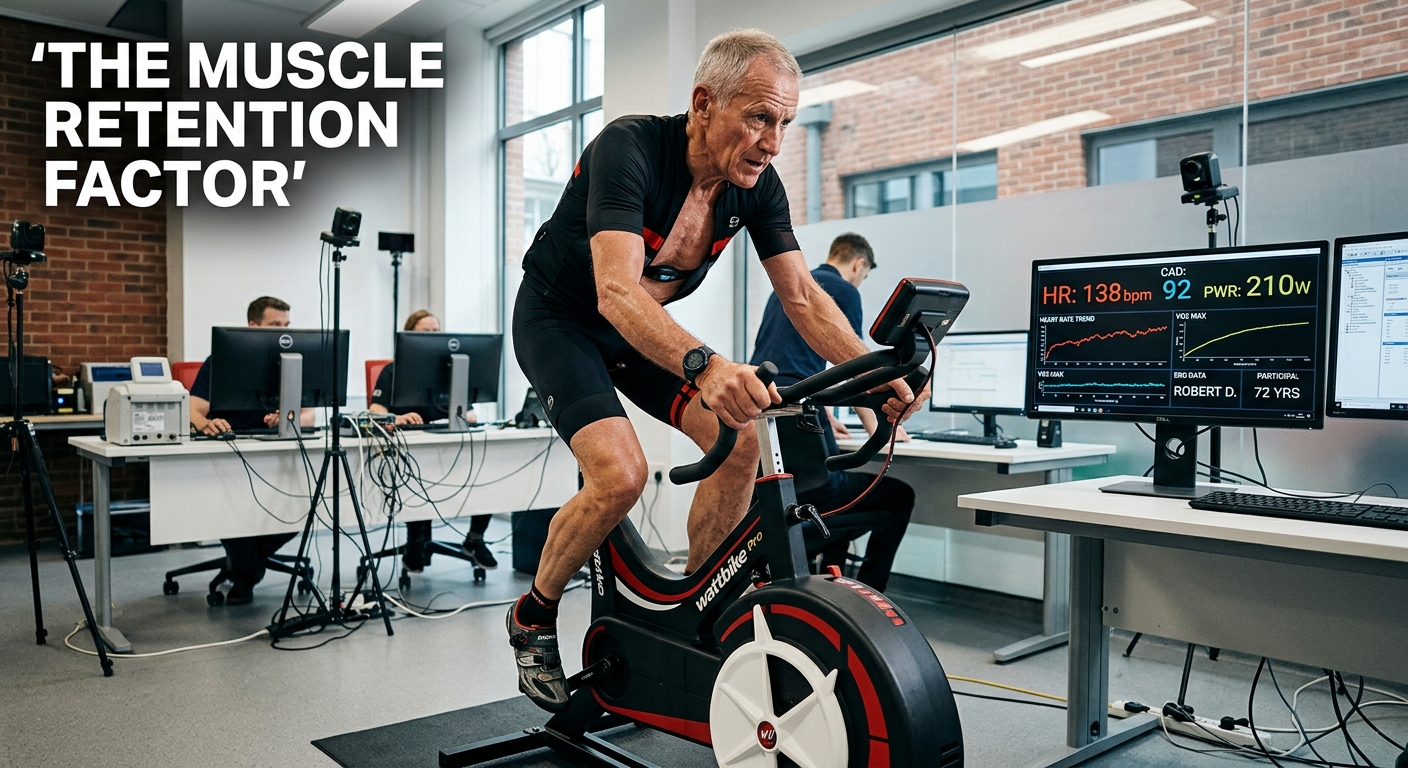
When older adults drop weight through standard aerobic workouts, they often lose lean skeletal muscle alongside body fat. A randomized controlled trial conducted by researchers from the University of the Sunshine Coast and The University of Queensland shows that workout intensity determines whether that muscle is preserved.
Published in the journal Maturitas, the six-month study evaluated 123 healthy older adults with an average age of 72 and an average body mass index of 26 kg/m². Participants completed three supervised gym sessions each week, logging a 99 percent overall attendance rate. While every exercise group lost modest amounts of fat, only high-intensity interval training, or HIIT, protected lean muscle mass from breaking down.
How the Three Training Protocols Compared
Researchers split participants into three distinct exercise tracks to observe how differing levels of cardiovascular strain influenced body composition over six months:
- High-intensity interval training: Four 4-minute bursts on stationary exercise equipment sustained at 85 percent to 95 percent of maximum heart rate, separated by brief recovery intervals.
- Moderate-intensity continuous training: Thirty minutes of steady cycling or walking held between 60 percent and 70 percent of maximum heart rate.
- Low-intensity activity: Gentle stretching, mobility, and balance exercises performed at 45 percent to 55 percent of maximum heart rate.
Using dual-energy X-ray absorptiometry scans, the research team measured shifts in tissue distribution before and after the intervention. Both the high-intensity and moderate-intensity cohorts lost between 0.5 and 1 kilogram of fat mass and improved the distribution of weight carried around their midsections.
The divergence showed up in lean muscle tissue. The HIIT group maintained their lean mass across the full six months. Participants assigned to continuous moderate-intensity exercise recorded a small decline in lean muscle, reflecting the common consequence of conventional aerobic regimens.
"We found that high, medium and low intensity exercises all led to modest fat loss but only HIIT retained lean muscle," said Dr. Grace Rose, an exercise physiologist at the University of the Sunshine Coast and lead author of the study. Dr. Rose noted that while moderate training cut fat, it also caused a small decline in lean muscle.
The Mechanical Signal That Protects Muscle
Age-related muscle loss, known clinically as sarcopenia, impairs balance, reduces physical independence, and alters metabolic health. When older adults diet or rely solely on steady-state cardio, caloric deficits often push the body to draw energy from muscle tissue as well as fat deposits.
The study authors suggest the intense mechanical strain of interval bouts changes that response. Co-author Associate Professor Mia Schaumberg explained that strenuous bursts send a distinct signal through the muscular system.
"High-intensity training in this study involved repeated short bursts, or intervals, of very hard exercise, where breathing is heavy and conversation is difficult, alternated with easier recovery periods," Schaumberg said. Schaumberg pointed out that HIIT likely works better because putting greater stress on the muscles gives the body a clear biological cue to hold onto tissue rather than break it down.
Safety, Feasibility, and Conflicting Evidence
Physicians often approach high-intensity regimens for older patients with caution because of concerns over cardiovascular strain or joint injuries. Recent clinical trials suggest structured interval programs can be carried out safely by older participants.
A separate 2026 trial published in Medicine & Science in Sports & Exercise followed 20 adults aged 61 to 74 who completed an eight-week, remotely supervised home HIIT program. Participants achieved a 96 percent session completion rate, lost an average of 1.4 kilograms of fat mass, and reported zero adverse cardiac or orthopedic events.
HIIT is not universally superior across every metric. An August 2026 systematic review in the Journal of Clinical Medicine analyzed 25 studies covering 2,818 older adults, concluding that HIIT did not consistently outperform moderate-intensity continuous exercise on every metabolic and functional benchmark.
In a 16-week randomized trial published in The Journals of Gerontology, Series A in 2026, researchers tracked older adults living with HIV who completed either interval training or moderate continuous exercise alongside resistance workouts. With strength training included in both arms, researchers observed no statistically significant difference in lean mass preservation, indicating that lifting weights can offset the muscle loss seen with continuous moderate cardio alone.
Unresolved Questions on Frailty and Long-Term Retention
The Australian trial followed independent, healthy older adults, leaving it unclear how interval training would work for frail, sedentary, or mobility-impaired individuals. Muscle retention and injury rates beyond the six-month study window also remain unverified across larger, more varied populations.
Researchers are still evaluating detailed body composition data for the low-intensity stretching and balance group. For healthy seniors who want to reduce body fat without sacrificing skeletal muscle, current evidence shows that short, demanding intervals offer a distinct advantage over steady-state aerobic sessions.
I’m a techie & gamer turned SEO strategist with a genuine passion for technology, AI, science, and gaming. I love exploring new technology, following the latest developments, and looking beyond the headlines to understand what is really happening. I write about the latest tech news, trends, products, tools, and ideas shaping our digital world. What I share is not just news. My articles include my own views, observations, and practical experiences, written in a simple and useful way. At Penguin Lens, I enjoy sharing what I discover, what I think, and what I believe readers should know, with the goal of making technology easier to understand and more interesting to explore.

Why Taking Vitamin D2 Might Actually Lower Your Body's D3 Levels
More in Science & Future
 Science & Future
Restoring UBE2N Enzyme Reduces Damage in Advanced Fatty Liver Models
 Science & Future
Scientists Discover Hidden Giant Stick Insect Species Camouflaged for Decades
 Science & Future
How a Giant Australian Stick Insect Fooled Scientists for Decades
 Science & Future