

SpaceX Delivers Brain Organoids and Retina Tech to ISS in Latest Cargo Run
The CRS-35 mission delivers advanced biological models and final power upgrades to the International Space Station.

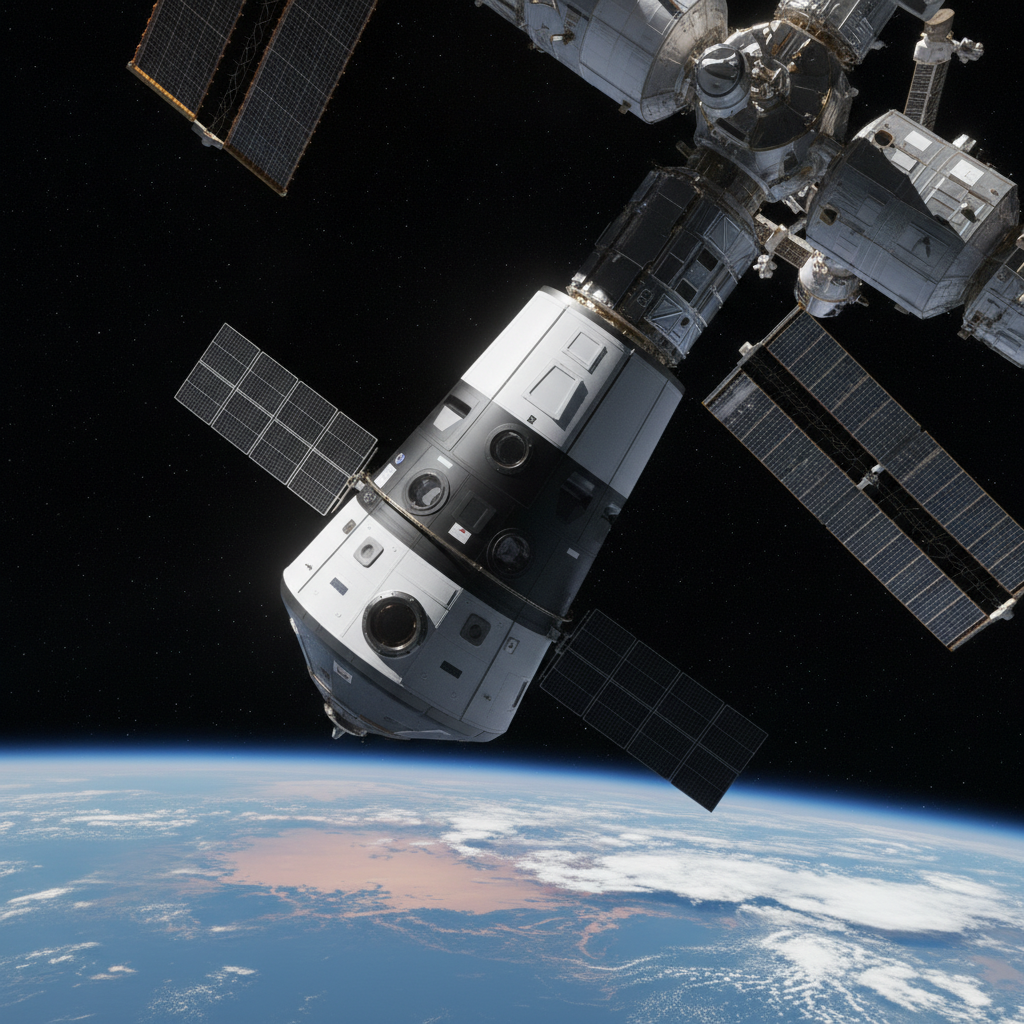
A SpaceX Dragon capsule docked at the International Space Station on October 15, delivering more than 6,300 pounds of research hardware and supplies for the Expedition 75 crew. The commercial resupply flight, CRS-35, carried several biological studies and technology demonstrations designed to operate in microgravity.
Medical research and retinal manufacturing
Key payloads include lab-grown 3D brain organoids and heart tissue models. The brain tissue investigation, called the miBrain model, was developed from patient-derived stem cells by the Icahn School of Medicine at Mount Sinai in collaboration with NASA and Space Tango. Dr. Joel W. Blanchard, project leader at Mount Sinai, said the research could establish the platform as a practical tool for assessing neurological risk before and during spaceflight. Over a planned five-week run, researchers will evaluate brain aging, radiation exposure, and genetic factors including APOE4.
Dragon also delivered hardware for the LambdaVision-1 study to evaluate the production of artificial retinas in orbit. According to NASA, microgravity allows for more uniform and stable thin-film layering, which could assist efforts to develop implants for conditions such as retinitis pigmentosa and age-related macular degeneration. The shipment also contains materials to examine how new types of glass form in microgravity.
Power grid updates and return flight
Outside the pressurized cabin payloads, the capsule carried the final pair of International Space Station Roll-Out Solar Arrays. The hardware will complete a multi-year project to upgrade the station's electrical power grid. Canadian Space Agency astronaut Joshua Kutryk is slated to carry out two spacewalks later this fall to install the new arrays, though NASA has not set calendar dates.
The flight began with an early morning launch on October 13 from Cape Canaveral Space Force Station in Florida. Sunlight striking the Falcon 9 exhaust plume at high altitude created a twilight jellyfish illumination visible along the eastern U.S. coastline.
Dragon is scheduled to stay docked at the Harmony module until mid-November 2026. The spacecraft will then pack finished scientific experiments and splash down in the Pacific Ocean off the California coast.
I’m a techie & gamer turned SEO strategist with a genuine passion for technology, AI, science, and gaming. I love exploring new technology, following the latest developments, and looking beyond the headlines to understand what is really happening. I write about the latest tech news, trends, products, tools, and ideas shaping our digital world. What I share is not just news. My articles include my own views, observations, and practical experiences, written in a simple and useful way. At Penguin Lens, I enjoy sharing what I discover, what I think, and what I believe readers should know, with the goal of making technology easier to understand and more interesting to explore.

Super El Niño Collides With Record Ocean Warming as Pacific Breaches 30°C
More in Science & Future
 Science & Future
Clinical Trial Finds HIIT Is the Only Aerobic Workout That Spares Muscle While Shedding Fat in Older Adults
 Science & Future
Why Taking Vitamin D2 Might Actually Lower Your Body's D3 Levels
 Science & Future
Restoring UBE2N Enzyme Reduces Damage in Advanced Fatty Liver Models
 Science & Future