

Beats 360 Tested: 46-Hour Battery Meets Polarizing Fit and Circuit Hiss
Technical reviews highlight modular cushions and marathon battery performance on the $350 Beats 360, alongside high clamping pressure and idle circuitry noise.

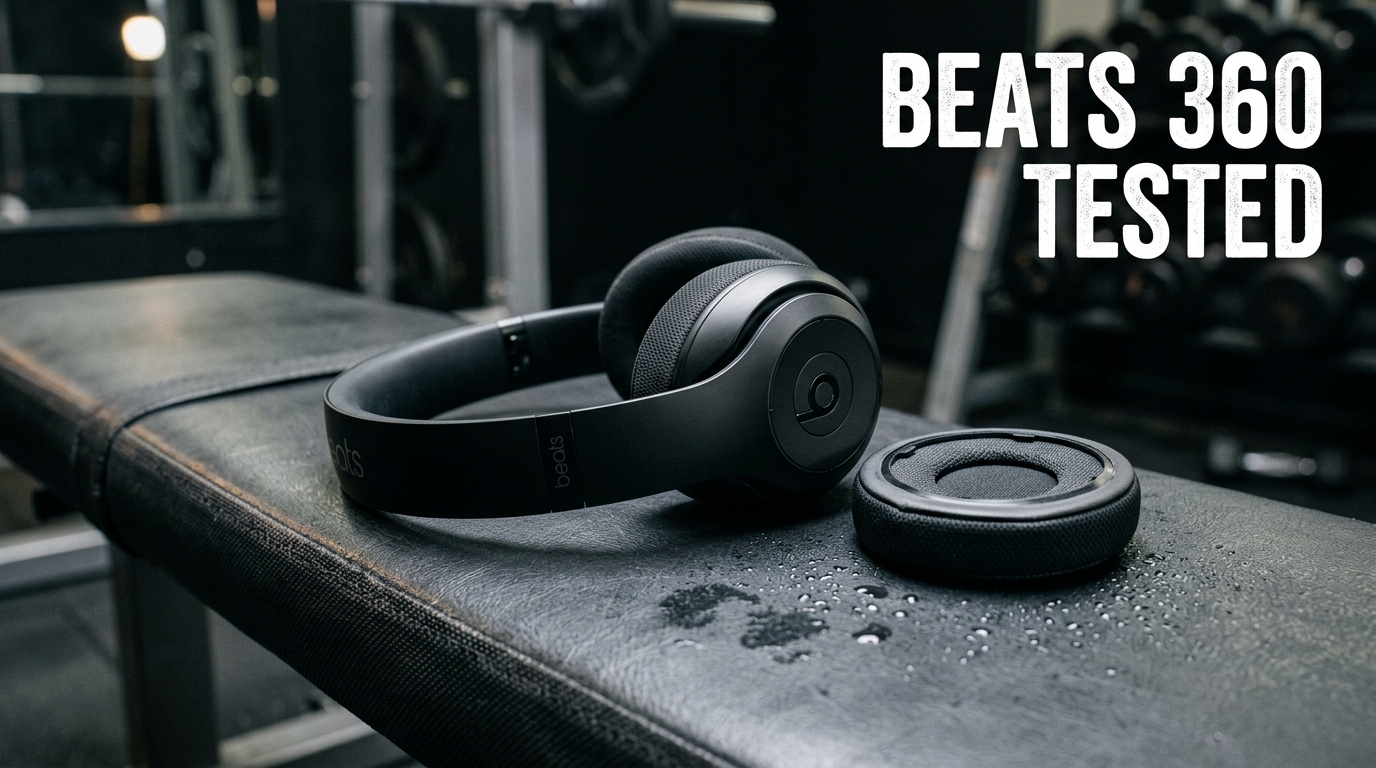
When Apple-owned Beats launched the Beats 360 over-ear wireless headphones in late September 2026, the brand targeted fitness routines. Priced at $350, the model introduces an IPX4 sweat-resistance rating to Beats' over-ear portfolio, paired with modular components and cross-platform support. Technical evaluations from outlets including GSMArena and hardware teardowns from 36Kr detail how those engineering choices behave in practice.
Battery Endurance Across Platforms
Beats rates the headphones for 32 hours of continuous playback with active noise cancellation enabled. Benchmarks from GSMArena showed runtime exceeding that baseline, though longevity varied by connected platform.
Paired with an Android device, the Beats 360 recorded 46 hours of continuous playback. Connected to an iPhone under the same test parameters, endurance dropped to just over 37 hours. The technical cause behind the headphones consuming over 20 percent more power on iOS remains unconfirmed, even as both figures surpass manufacturer estimates.
TWS Architecture and Modular Cushions
A teardown by 36Kr showed the Beats 360 built around a true wireless stereo (TWS) configuration scaled to full-size earcups. Each cup integrates its own Beats Gen 4 processor, battery cell, and radio frequency module, running digital signal processing independently rather than relying on a master-and-replica cup layout.
Hardware modularity is central to the design. The ear cushions and headband padding detach quickly, with Beats offering replacement packs in multiple fabrics and colors for an introductory $10 before a planned $50 standard price. Integrated proximity sensors detect cushion presence; detaching a pad pauses playback while software reconfigures acoustic tuning for the installed material. At 295 grams, the headphones sit well below the 386-gram weight of Apple's $549 AirPods Max 2.
Acoustic Tuning, Adaptive EQ, and Circuitry Noise
Assessments of overall sound quality remain mixed. GSMArena and TechRadar noted that the Beats 360 offered a more balanced profile than the AirPods Max 2, aided by a claimed 12dB boost in sound pressure headroom. Conversely, comparisons from Beats Studio Pro owners indicated the new model does not represent a clear acoustic upgrade over that predecessor.
Testing also exposed two operational quirks. Adaptive EQ functions strictly when active noise cancellation is switched off. In addition, reviewers reported a noticeable background hiss during low-volume listening, spoken audio, or quiet pauses. The artifact stems from a high noise floor in the amplification circuit, though whether future firmware updates can resolve it across all units remains uncertain.
Ergonomics and Port Limits
The workout-oriented construction introduces clear physical trade-offs. Testers cited limited headband extension and tight clamping force. While the secure fit prevents movement during intense exercise, it can cause fatigue during long listening sessions, particularly for larger head sizes.
Wired connectivity is entirely absent. Beats omitted the 3.5mm audio jack, and unlike on the Studio Pro, the USB-C port is restricted strictly to charging. Users seeking wired latency-free monitoring or direct USB digital audio output will have to look at alternative models.
I’m a techie & gamer turned SEO strategist with a genuine passion for technology, AI, science, and gaming. I love exploring new technology, following the latest developments, and looking beyond the headlines to understand what is really happening. I write about the latest tech news, trends, products, tools, and ideas shaping our digital world. What I share is not just news. My articles include my own views, observations, and practical experiences, written in a simple and useful way. At Penguin Lens, I enjoy sharing what I discover, what I think, and what I believe readers should know, with the goal of making technology easier to understand and more interesting to explore.

Galaxy S26 Prices Jump $100: How to Beat Samsung's Sudden Hike
More in Mobile
 Mobile
Honor Confirms January European Launch for Magic9 Series
 Mobile
Google Raises Pixel 10a Price by $100 to $599
 Mobile
iQOO 16 Reaches India for Testing, but Rs 1 Lakh Rumors Loom
 Mobile