

Google Playground Lets Anyone Prompt a Game into Existence, But Early Results Lean Toward Slop
Google's experimental AI Playground generates playable browser games from simple text prompts, but hands-on tests reveal erratic edits and shallow clones.

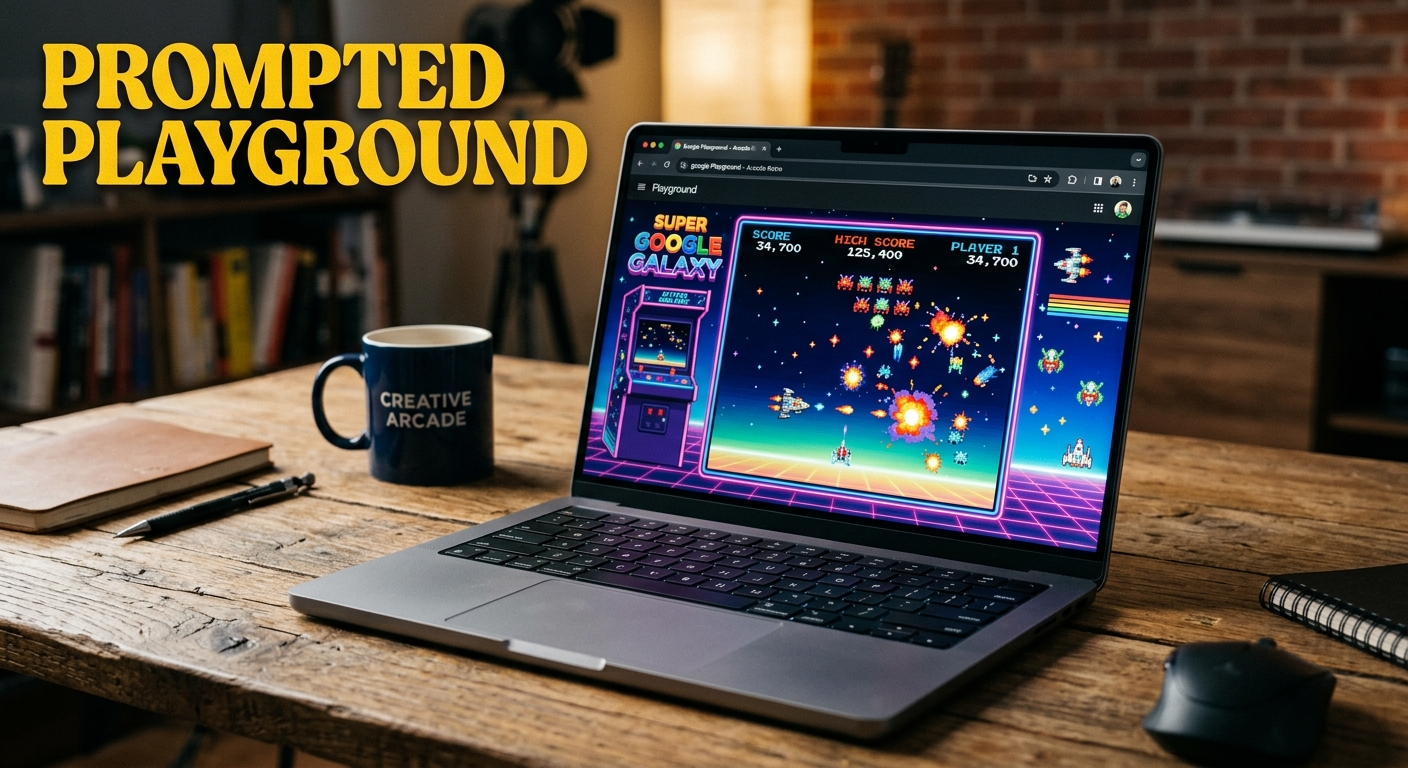
Google launched an experimental browser platform called Playground through Google Labs on October 7, pitching it as a way for anyone to build video games purely through natural language prompts. Less than a week into public availability, early hands-on testers have discovered that while turning a single sentence into a working arcade shooter takes only minutes, turning that prototype into something genuinely fun remains an uphill battle.
The system runs entirely in web browsers across phones and laptops, generating lightweight packages of HTML, CSS, and JavaScript that users can download as ZIP files. Google promotes the tool under the pitch: "If you can think it, you can play it. Create, play, and share custom games - no coding required." But early critical reactions highlight the sharp divide between automated software generation and intentional game design.
Access Rules and Underlying Models
Access to Playground is currently restricted to United States residents who are at least 18 years old. Google has placed free-tier accounts on a waitlist, while subscribers to Google AI plans starting at $4.99 per month receive immediate creation access. Browsing and playing games published to the platform's public Explore gallery remains free, provided the submissions pass automated safety screenings.
Reports indicate the system combines several internal models, including Google's Gemini, Nano Banana, and the audio generator Lyria. Users type an initial concept into a chat prompt, and within a few minutes, the interface compiles a playable canvas complete with rudimentary visual assets, background audio, and movement mechanics.
"Playground lowers the barriers to creation, so bringing game ideas to life can now be as easy as describing it through a few prompts - no coding experience required," said Maryam Karimzadehgan, a software engineer on Google's AI Innovation + Research team. Karimzadehgan added that users can direct the tool to adjust mechanics on the fly: "Want to tweak the physics, rewrite the rules, customize the characters, or overhaul the environment? Just ask."
Early Tests: 2D Shooters and Casual Clones
Early hands-on trials show the tool can assemble classic game loops quickly. Testing by Tom's Guide demonstrated that Playground could produce a functioning 2D arcade space shooter complete with distinct weapon pickups, defensive shields, and multi-stage boss encounters without writing code.
Yahoo Tech reporters generated fantasy projects including "Mystic Dragon Glide" in minutes. Yet the consensus across these trials was that professional game developers do not need to worry just yet. The generated titles mimic basic casual browser games, often leaning on simplistic physics and repetitive enemy behaviors.
Wired offered a sharper critique under the headline "I Made Terrible Games With Google’s AI Playground," subtitled "A long day's haul in the video game slop mines." The review documented how quickly conversational game building degenerates into an exercise in frustration once creators attempt to refine their projects.
Code Regressions and Broken Mechanics
The main technical friction occurs during revisions. Google claims creators "stay in complete control of the creative direction from rough concept to final product," but testers repeatedly encountered erratic prompt handling.
Because the AI rewrites parts of the underlying code with each prompt, requesting a small tweak, such as adjusting jump height or changing a character color, frequently breaks unrelated elements. Testers reported health bars disappearing, collision detection failing, and control schemes suddenly inverting. Without direct code access or version control tools in the interface, fixing these errors often requires rolling back prompts or starting over entirely.
Market Reaction and Unity Partnership
Despite the primitive state of the generated games, financial markets responded immediately. Unity shares rose 3 percent following Google's announcement, while Roblox shares fell 4 percent.
The interest in Unity stems from Google's roadmap. Google partnered with Unity to integrate Unity Spark later in the year. That integration is planned to introduce 3D assets, structured physics, and professional mechanics to replace basic 2D JavaScript canvases.
Unresolved Questions on Pricing and Rollout
Google has not announced international release dates or confirmed when creators outside the United States will gain access. Questions also remain over whether creation will permanently require a paid Google AI subscription after the experimental phase ends, or whether free-tier users will receive regular token allowances.
The next test for the platform will be the closed beta for Unity Spark. Until Google shows that conversational prompts can manage complex 3D logic without breaking mechanics during edits, Playground remains a lightweight experimental sandbox rather than a full development tool.
I’m a techie & gamer turned SEO strategist with a genuine passion for technology, AI, science, and gaming. I love exploring new technology, following the latest developments, and looking beyond the headlines to understand what is really happening. I write about the latest tech news, trends, products, tools, and ideas shaping our digital world. What I share is not just news. My articles include my own views, observations, and practical experiences, written in a simple and useful way. At Penguin Lens, I enjoy sharing what I discover, what I think, and what I believe readers should know, with the goal of making technology easier to understand and more interesting to explore.

Why the 2026 Midterms Are Turning Into a Referendum on AI Data Centers
More in Tech
 Tech
TechMicrosoft Targets MacBook Pro With $2,599 Nvidia-Powered Surface Laptop Ultra
 Tech
TechTouchscreen MacBook Pro Planned for Fall Launch With Lighter Chassis, Gurman Reports
 Tech
TechCalifornia Signs Law Fining Robotaxis That Block Emergency Crews
 Tech
Tech