

California Signs Law Fining Robotaxis That Block Emergency Crews
New legislation requires autonomous vehicle operators in California to deploy local field technicians and face penalties if disabled cars impede first responders.
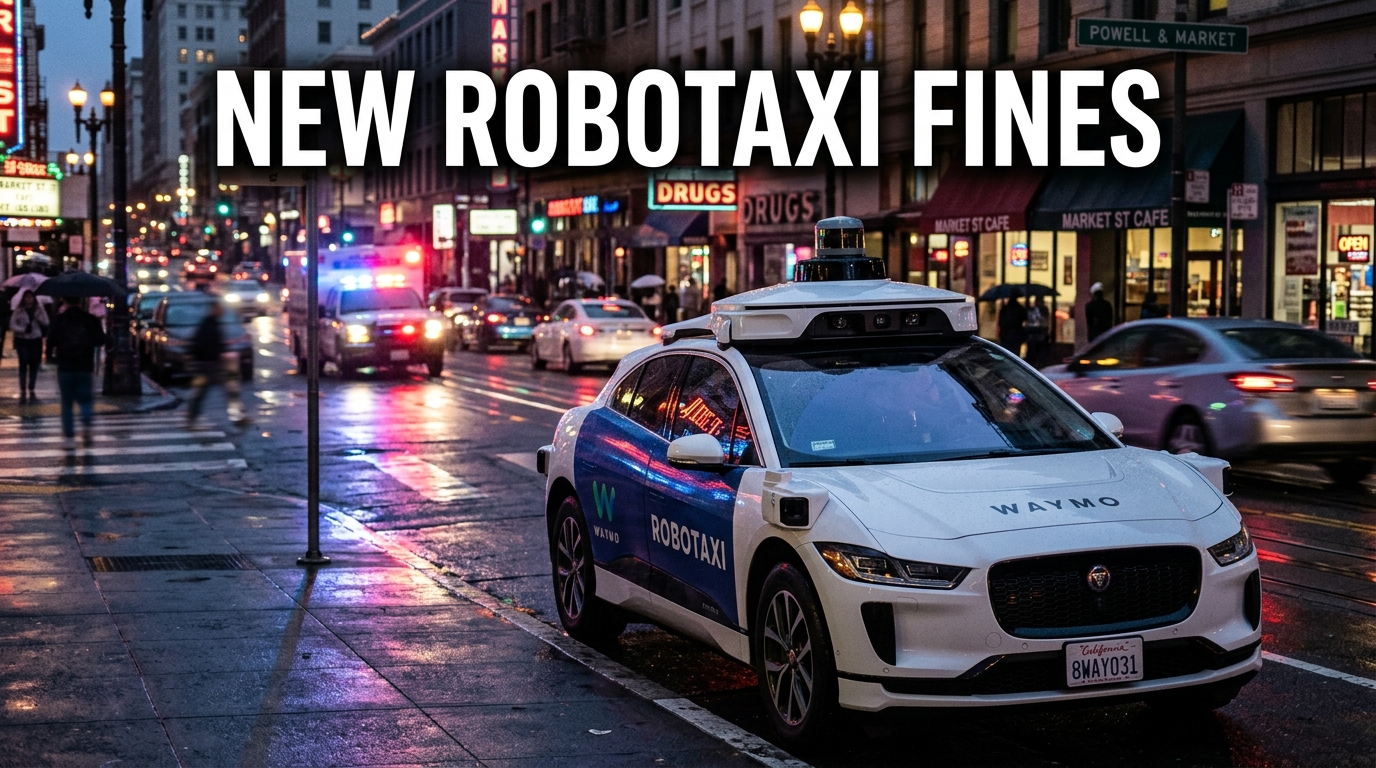
Autonomous vehicle operators in California will face local fines if their driverless cars block police, firefighters, or medical personnel for more than 30 minutes, under legislation signed by Governor Gavin Newsom.
Senate Bill 1246, authored by State Senator Dave Cortese (D-San Jose), introduces operational requirements intended to address disputes between commercial robotaxi fleets and emergency personnel. The provisions are scheduled to take effect on July 1, 2028.
Local Technicians and Remote Driver Rules
Under SB 1246, autonomous vehicle operators cannot rely exclusively on remote troubleshooting centers when a vehicle obstructs traffic. The statute mandates that companies provide municipal authorities with on-site support through local incident technicians trained to physically manage and move disabled vehicles during emergencies.
The law also establishes statutory distinctions between remote roles. Any remote driver exercising direct vehicle control must be physically located within the United States and hold a valid U.S. driver's license. That restriction does not apply to remote assistance personnel, who issue routing commands and software guidance while the vehicle's automated driving system retains operational control.
In addition, operators experiencing system-wide fleet failures must notify local municipalities and emergency personnel regarding vehicle status and locations.
Emergency Response Disruptions
The legislation follows recurring municipal reports of robotaxis stalling in active traffic lanes. San Francisco fire officials recorded 31 instances between April 2025 and mid-2026 where autonomous vehicles obstructed first responders. In July 2026, the National Highway Traffic Safety Administration raised concerns across the autonomous driving sector regarding vehicles blocking emergency operations.
During a San Francisco power outage in December, Waymo reported 1,593 stoppages lasting two minutes or longer, with 64 stalled vehicles requiring retrieval by tow trucks or field personnel.
Earlier drafts of the legislation proposed fines of $5,000 for failing to move a disabled vehicle and up to $10,000 for blocking first responders beyond 30 minutes. The final statutory fine schedule will be codified ahead of the 2028 enforcement date.
Legislative Impact
"California has embraced autonomous vehicles, but we cannot embrace innovation at the expense of public safety," Cortese said. "When an autonomous vehicle crashes, breaks down, blocks a roadway in an emergency, or gets in the way of law enforcement or first responders, there must be clear accountability."
Waymo, which operates roughly 1,200 commercial robotaxis in the San Francisco Bay Area and 4,000 nationwide, supported the amended measure.
"We are grateful for the amendments made to the bill, which ensure autonomous vehicle operators can still feasibly serve Californians," a Waymo spokesperson said, adding that the company remains committed to safety improvements.

Protego Ventures Drops Massive $125M War Chest to Dominate Israeli Defense Tech
More in Tech
 Tech
TechPeak XV Just Bumped Surge Seed Funding to $5 Million and Revealed 18 New Startups
 Tech
TechAI Giant Modal Labs is Quietly Raising $750M at a Shocking $15.75B Valuation
 Tech
TechMeta's New Enterprise AI Just Tanked Rival Stocks 4% (And Stole MongoDB's CEO)
 Tech
Tech