

Why John Wilson's Bizarre Concrete Metaphor Will Change How You See The World
The awkward documentary genius returns with a surprising new obsession. John Wilson has found the ultimate reflection of modern society buried inside the history of concrete.
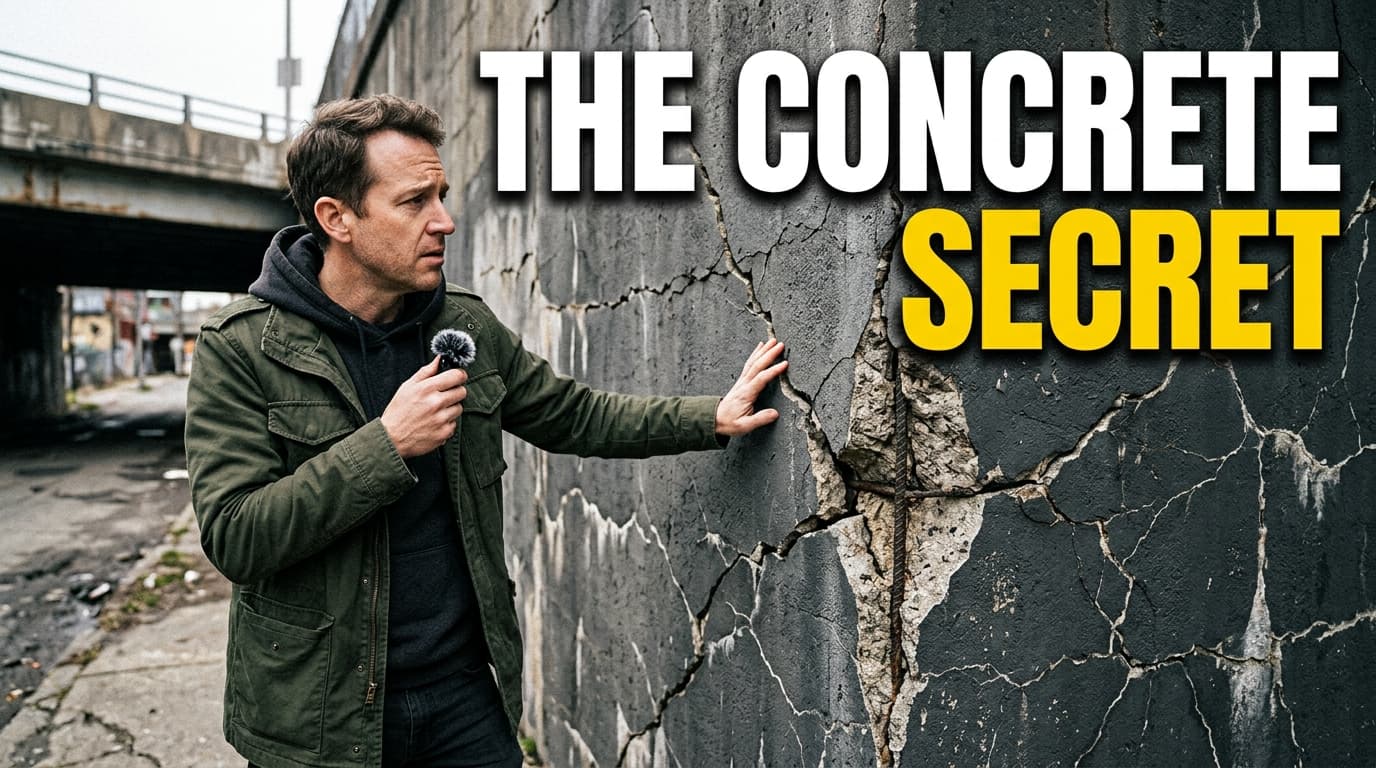
Comedic filmmaker John Wilson has built an entire career out of capturing the bizarre intricacies of everyday life. His latest project takes this hyper-focused obsession to a literal foundational level by examining the history of concrete. Readers will discover exactly how a mundane building material became a profound lens for understanding modern isolation, digital infrastructure, and societal decay.
Key Takeaways
- The new documentary project uses the John Wilson concrete metaphor to explain human connection and modern isolation.
- Wilson traces the material back to ancient Rome, comparing durable ancient structures to fragile modern developments.
- Gaming and tech publications have praised the film for its parallels to virtual world-building and digital architecture.
- The filmmaker maintains his signature first-person camera style, capturing weird street encounters to illustrate his points.
- Critics consider this one of the most poignant explorations of urban loneliness currently available on streaming platforms in 2026.
The Ultimate Urban Metaphor
Wilson's lens on the world is entirely unique. He wanders the streets of New York City, and occasionally beyond, with a handheld camera to collect visual evidence of human eccentricity. When he tackles a topic as dry as concrete, he is never just talking about cement and water. The John Wilson concrete metaphor serves as a vehicle to explore how we construct the barriers in our own personal lives. He looks at freshly poured sidewalks, noting the inevitable cracks that form over time as the earth settles. These physical fissures quickly become a stand-in for the fractures in our social contracts.
By speaking to construction workers, local historians, and random pedestrians who happen to be staring at wet cement, Wilson extracts deep philosophical truths from the most overlooked substance on earth. He observes how people interact with wet concrete, carving their initials into the sludge to leave a permanent mark on an impermanent world. The camera lingers on these crude carvings, forcing the audience to think about the human desire for legacy. The visual comedy of scaffolding, which he previously covered extensively, returns here as a thematic sibling. Concrete represents the permanent mistakes we are forced to live with, while scaffolding represents the temporary fixes we use to hide them.
The pacing of his edits does the heavy lifting. He will show a structural engineer explaining load-bearing pillars, cut to a shot of a pigeon trapped inside a cement mixer, and then cut to an interview with a lonely man building a tiny cinderblock wall in his tiny apartment. The connections are never explicitly stated, but the viewer feels the emotional weight of the concrete pressing down on the subjects.
Bridging Physical and Digital Worlds
Why did gaming sites like Kotaku pick up this specific story on a random Saturday in late September 2026? The answer lies in how the John Wilson concrete metaphor extends into virtual spaces. During a pivotal segment of the project, Wilson interviews video game level designers about brutalist architecture. He draws a direct line between the massive, imposing concrete structures of the physical world and the digital concrete used in titles like Control, Half-Life 2, and modern open-world sprawling epics.
He breaks down the similarities between physical and virtual urban planning through several distinct observations:
- Structural Limitations: Physical concrete requires rebar and cures over time. Digital concrete is instant but requires immense processing power to render lighting and textures accurately, creating a different kind of architectural burden.
- Emotional Weight: Both physical and virtual brutalism evoke feelings of insignificance and corporate dominance. Game developers use concrete textures specifically to make the player feel small and powerless.
- Permanent Mistakes: A bad pour in real life requires jackhammers and heavy machinery to fix. A baked-in rendering error in a virtual city requires massive server patches and code rewrites.
- Illusion of Solidity: Real concrete is porous and constantly shifting. Video game concrete is entirely hollow, an illusion of polygons and texture maps that players can occasionally clip right through.
By framing virtual worlds as just another form of urban sprawl, Wilson captures the attention of the gaming community. He points out that we are escaping physical concrete jungles only to wander through digital ones built on the exact same aesthetic principles. He highlights the irony of players spending hours meticulously building concrete bunkers in survival games to hide from other players, mirroring the exact isolationist tendencies we see in modern suburban architecture.
From Ancient Rome to Modern Sprawl
The historical research backing this project is surprisingly rigorous. Wilson travels outside his usual New York habitat to look at the origins of the material. The Romans perfected a mixture using volcanic ash and seawater that has survived for millennia. The Pantheon still stands today as a massive unreinforced dome that defies modern engineering constraints. Wilson contrasts this ancient durability with modern Portland cement, which often degrades within a few decades due to its internal construction.
This historical detour is where the John Wilson concrete metaphor hits its hardest emotional beat. Modern concrete relies on steel rebar for tensile strength. Over time, water seeps into the porous concrete, causing the steel to rust, expand, and shatter the structure from the inside out. This process, known as concrete spalling, becomes Wilson's primary analogy for modern relationships. He asks the audience why we deliberately build things we know carry the seeds of their own destruction. The planned obsolescence of modern architecture becomes a proxy for temporary friendships, disposable technology, and the fleeting nature of modern digital content.
He visits a massive, decaying concrete bunker on a forgotten coastline and compares it to a dead multiplayer server from an abandoned video game. Both are empty shells built for a community that no longer exists. The visual poetry of these comparisons elevates the documentary from a quirky comedy routine into a melancholic masterpiece. The ancient Romans built structures to communicate with the gods, while modern developers build structures to maximize square footage for minimal cost. Wilson forces us to reckon with what our concrete choices say about our current values.
The Streaming Landscape's Appetite for the Absurd
Streaming platforms in 2026 are heavily saturated with true crime retellings and generic reality programming. Wilson's work cuts through the noise because it refuses to follow a traditional narrative arc. The success of this latest exploration proves that audiences still crave deeply personal, idiosyncratic storytelling. Viewers resonate with his awkward narration and the seemingly accidental footage that perfectly aligns with his philosophical musings.
When he stumbles upon a group of tourists taking photos of a completely unremarkable concrete retaining wall, the audience understands the joke without a single laugh track. The John Wilson concrete metaphor works precisely because it is so absurd on its face. Who stares at a sidewalk and sees the collapse of human empathy? Wilson does, and he successfully convinces the viewer to see it too. His hyper-fixated lens creates a space where the mundane becomes fascinating.
The project solidifies his place as one of the most vital voices in documentary filmmaking. He blends observational comedy, grassroots journalism, and existential philosophy into an entirely unique format. The stuttering delivery of his voiceover, filled with long pauses and nervous intakes of breath, makes the profound realizations feel organic rather than scripted. He sounds like a friend who just had a massive epiphany while standing in line at the hardware store.
Summary
John Wilson has transformed the dullest building material on the planet into a profound reflection of human nature. By drawing connections between ancient Roman architecture, modern urban isolation, and digital video game environments, he has crafted a masterpiece of observational comedy. The John Wilson concrete metaphor will likely change the way viewers interact with both their physical surroundings and their virtual escapes. Ultimately, he proves that true art requires only a camera and the patience to look closely at the things everyone else steps on.
FAQs
Where can I watch John Wilson's new concrete documentary?
His latest documentary project is available on major streaming platforms. Check your local HBO or Max listings for the most up-to-date availability in your region.
What is the John Wilson concrete metaphor exactly?
He uses the creation, durability, and eventual decay of concrete to symbolize modern relationships and societal structures. He compares the rusting of internal rebar to the hidden flaws that destroy human connections from the inside out.
Why did gaming sites cover this documentary?
The film features a specific segment comparing physical urban sprawl to brutalist architecture in video game level design. Gaming publications praised his analysis of how virtual worlds mimic the isolating feelings of real-world concrete jungles.
Does John Wilson still use his first-person camera style?
Yes, the entire project is shot from his perspective. It features his signature shaky footage of bizarre street encounters, visual puns, and awkward interviews with unsuspecting pedestrians.
Is this a new season of his previous television show?
While it shares the exact same stylistic DNA and awkward narration as his previous television work, it functions as a standalone exploration focused entirely on the history and sociological impact of building materials.

Why Did the Powerhouse CEO Behind MasterChef Just Step Down After 9 Years?
More in TV & Streaming
 TV & Streaming
7 New Netflix, HBO Max and Prime Video Titles Worth Your Weekend, Ranked
 TV & Streaming
Russell Crowe's New Netflix Thriller Just Divided Critics, and the Reviews Prove It
 TV & Streaming